Competition Profile
John Force made Mustang Funny Cars impossible to ignore.
Force belongs in the Mustang story because his Ford years put the nameplate in front of a huge NHRA audience. These were not showroom-based cars, but the Mustang body and Ford identity mattered to fans watching drag racing on television and in the stands.
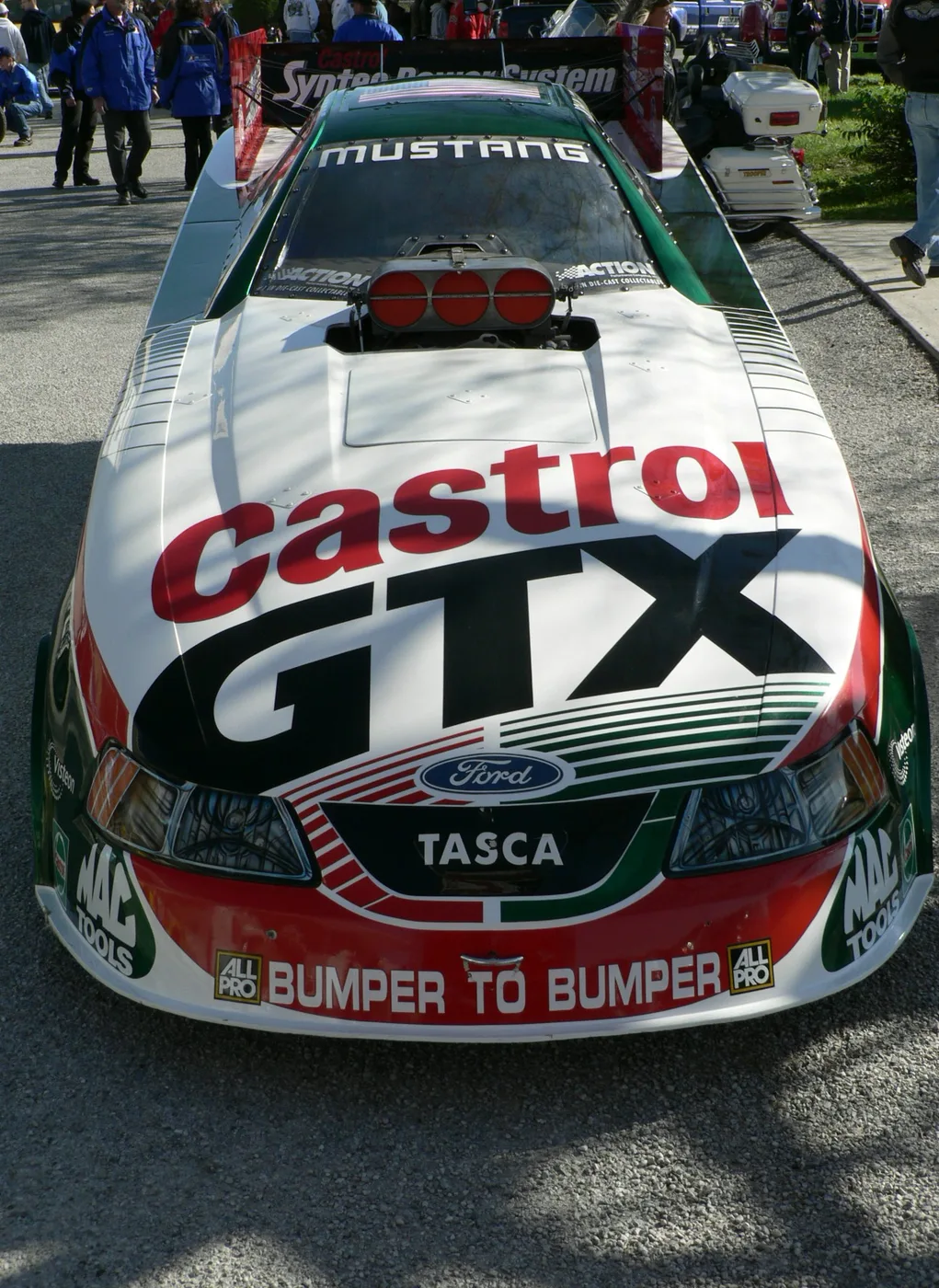
Image rights & changes
- Creator
- cole24_
- Exact source
- Open source record
- Use basis
- CC BY-SA 2.5; this web adaptation is offered under the same ShareAlike license.
- Changes
- Auto-oriented, resized to 1,400 pixels tall, converted to WebP, and metadata removed.
- Original identity
- Commons SHA-1:
92053e21c9a088bc3ca847d810e0b9f2491fa6bc - Public derivative checksum
- SHA-256:
21f26ddc3f16442943472c8a9772616c6b23a562d7a899669e25bafd3ecb7aab - Rights record checked
- July 26, 2026
Why Mustang people should care
- The Motorsports Hall of Fame of America's 2008 biography credited Force with 125 victories, 14 championships, and 10 consecutive championships at the time of that induction.
- His Mustang Funny Cars gave Ford a loud, national drag-racing presence in the modern era.
- Force's story helps explain why a Mustang-shaped race car can matter even when the machine underneath is purpose-built for NHRA competition.
Mustang connection
A Funny Car is not a production Mustang with racing parts bolted on. It is an extreme purpose-built drag car wearing a body identity that fans can recognize in a fraction of a second. That recognition is the Mustang connection: the brand shape, the Ford relationship, the team colors, and the memory of seeing a Mustang-bodied car shake the starting line.
Force made that connection valuable because he won, talked, promoted, crashed, returned, and kept the team in public view. For a Mustang enthusiast, his Ford years show how the nameplate reached beyond road racing and showroom performance into one of America's loudest motorsport cultures.
What to verify
For any John Force Racing Mustang Funny Car display, verify the season, sponsor package, body style, and whether the car is a race-used chassis, a show car, or a body mounted for display. NHRA cars can be re-bodied, repainted, and retired in ways that make visual identification tricky.
