Competition Profile
Ken Miles gave the GT350 its hard edge.
Miles is often remembered through Cobra and Ford GT40 history, but Mustang people should pay attention to the same trait that made him valuable there: he could drive, develop, and explain what a racing car needed to become faster.
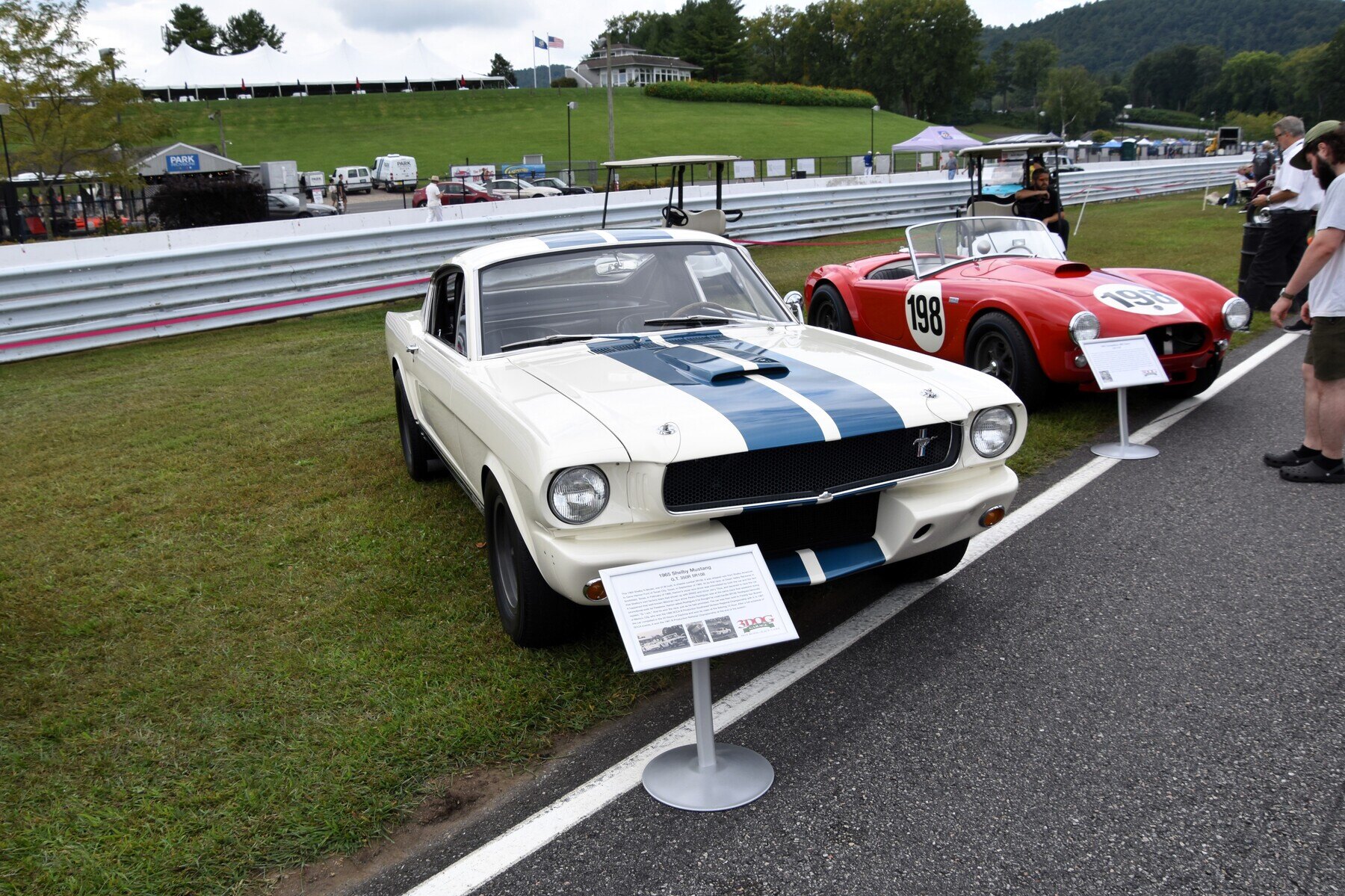
Image rights & changes
- Creator
- Charles from Port Chester, New York
- Exact source
- Open source record
- Use basis
- CC BY 2.0 with creator, exact source, license, and changes identified.
- Changes
- Reuses the approved gallery derivative: auto-oriented, resized, and metadata removed.
- Original identity
- Commons SHA-1:
4097d959ee200479c88ee3f081d633936054014c - Public derivative checksum
- SHA-256:
180f6663e53fa9e38b099910caa4b77fc605deaac75b68855fa3ab882e4d85b6 - Rights record checked
- July 26, 2026
Why Mustang people should care
- Miles ties the Mustang story to Shelby American's development bench, where street parts, race rules, driver feedback, and shop-floor improvisation became the GT350.
- The Motorsports Hall of Fame of America credits him with development work on the Shelby Cobra, Ford GT40 and Mk II, and Mustang GT350, which places the Mustang inside the same Ford performance push that went to Le Mans.
- His name helps separate real GT350R history from tribute-car mythology. If a car is presented with a Miles connection, that claim needs more than a familiar paint scheme.
Mustang connection
The GT350 was not just a dress-up package. Shelby American had to turn Ford's new fastback into a car that could survive SCCA B-Production racing and still support a road-car program. Miles belonged to the group that could translate track behavior into hardware changes: brakes, cooling, suspension attitude, steering response, and durability under racing use.
For enthusiasts, that matters because the early Shelby Mustang is best understood as a development car before it is a collectible. The stripes and badges came after the hard questions: could a Mustang stop repeatedly, put power down, stay cool, and keep enough Ford identity to sell from the showroom side of the program?
What to verify
When a GT350, GT350R, or continuation car is advertised with a Ken Miles connection, ask for serial-number documentation, Shelby American Automobile Club records, period race entries, ownership history, and photos that can be tied to a date and event. A car can be a legitimate Shelby without being a Miles-linked car, and the difference is expensive.
_(53993929942).jpg)