Select, Premium, and California Route 1
The regular catalog separates trim from the certified battery-and-drive configuration.
- Select 100A.
- California Route 1 200A.
- Premium 300A.
- No inferred completed mix.
Mustang Mach-E, 2022 vehicle phase
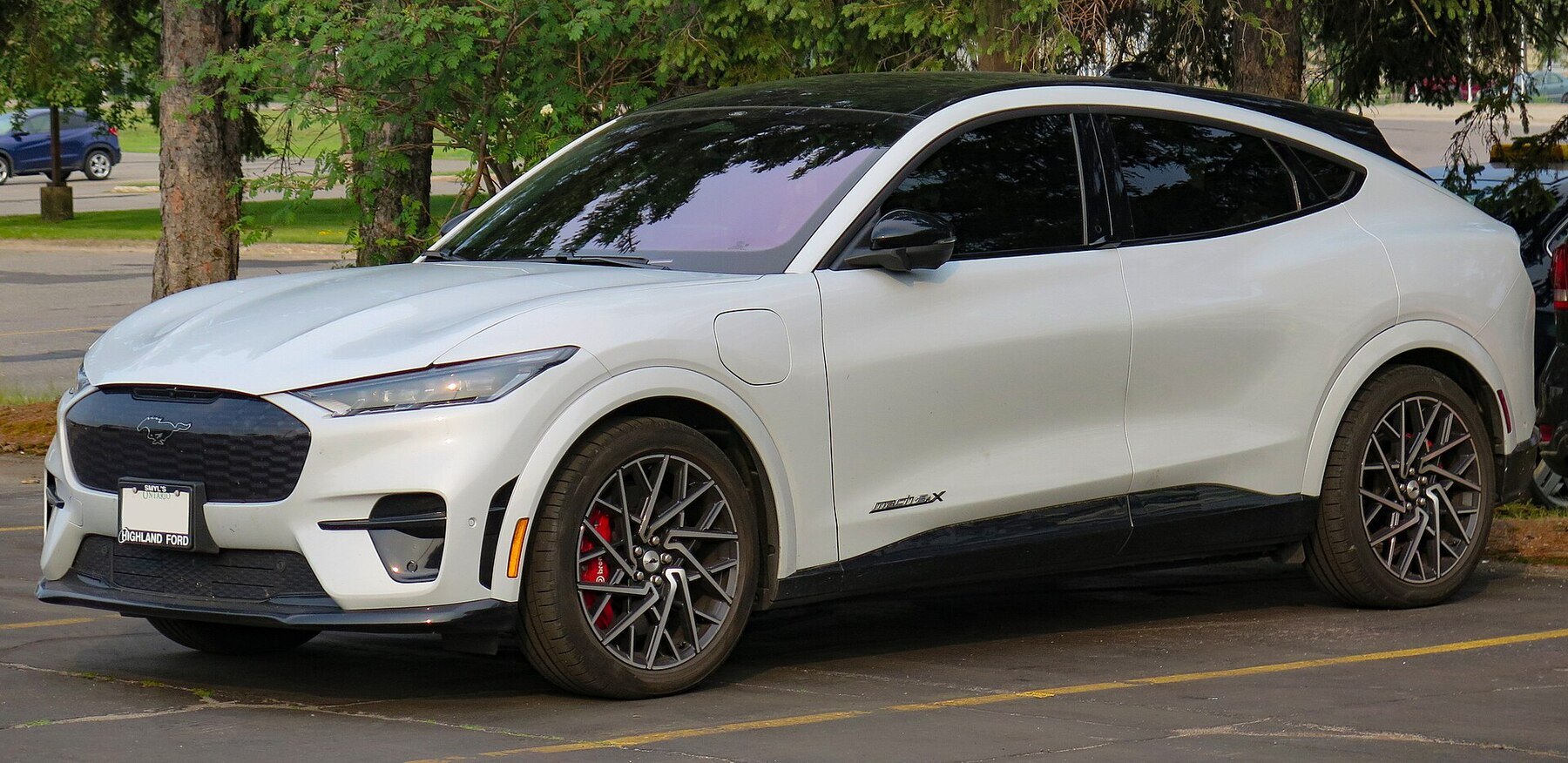
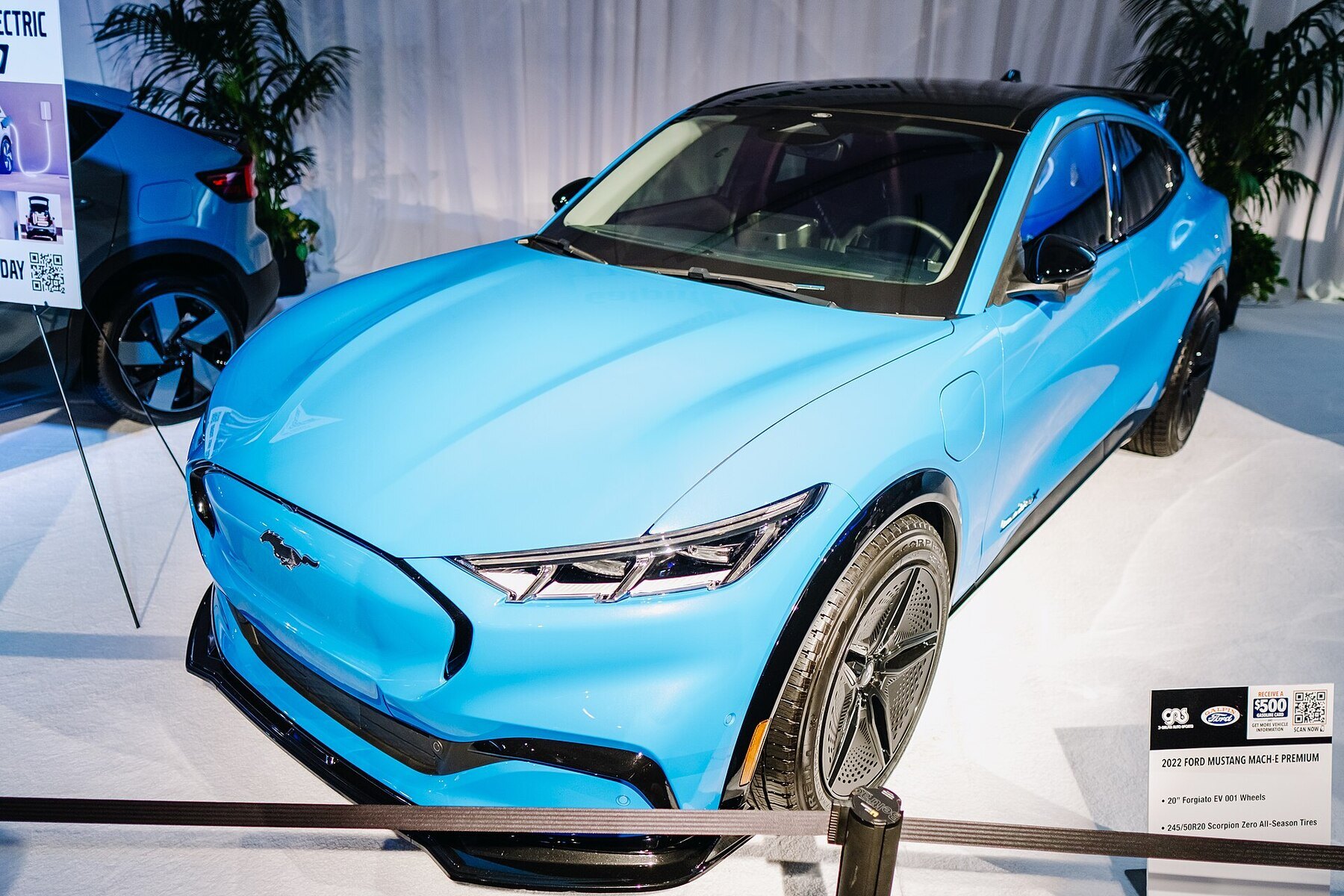
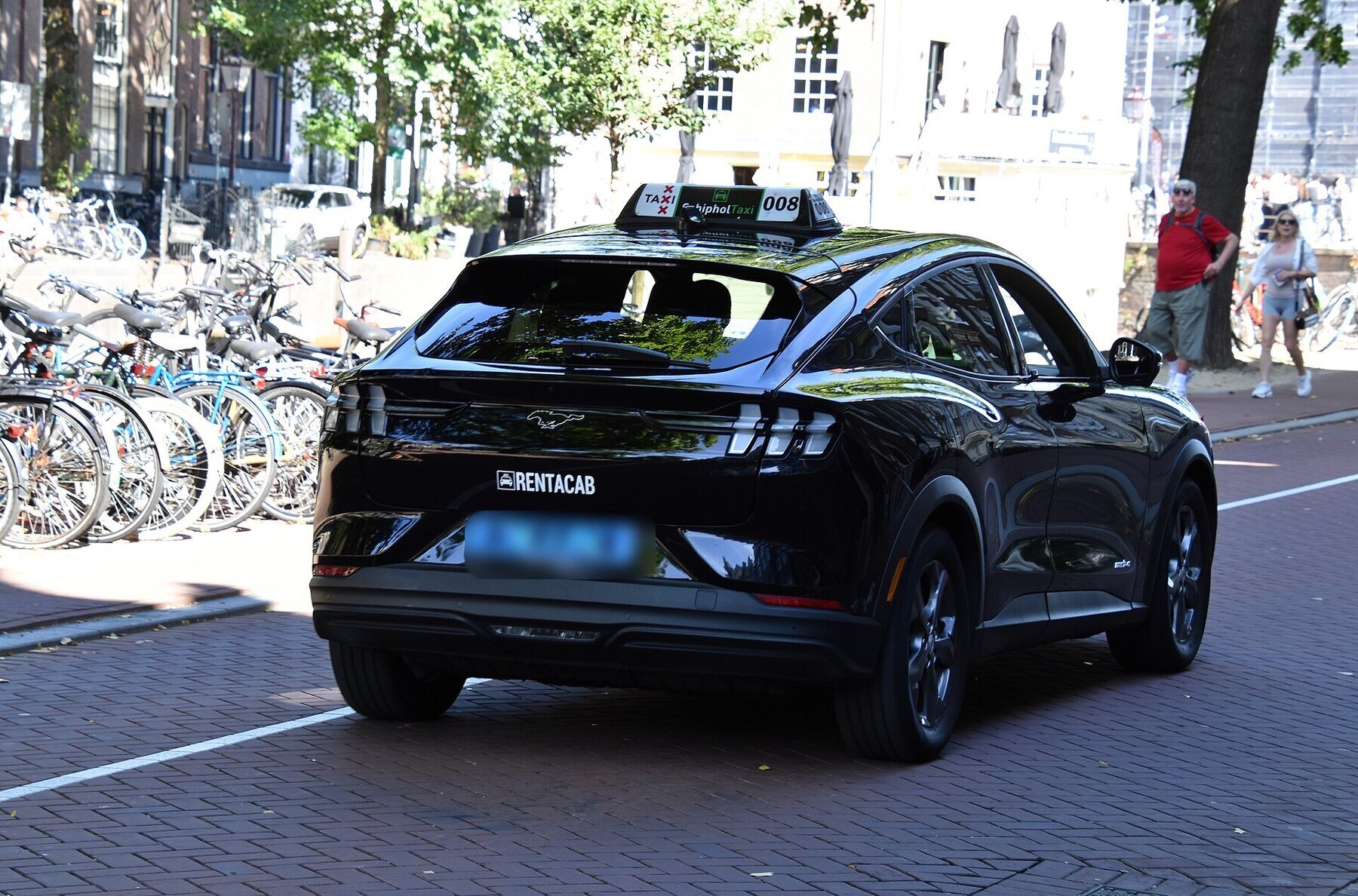
The 2022 Mustang Mach-E expanded its U.S. certified catalog to eight battery-and-drive configurations, increased usable battery capacity to 70 or 91 kWh, added California Route 1 all-wheel drive, and retained the 480-hp GT branch.
Cuautitlán calendar-year production: 71,712
Ford's calendar-year plant output, United States sales, and cumulative factory milestone have incompatible scopes. Plant output is not a model-year total, and sales are deliveries rather than production.
| Trim / Drivetrain | Battery / Motor | Drive | HP | Torque | EPA range | Efficiency | Charging | EPA record |
|---|---|---|---|---|---|---|---|---|
| Standard Range AWD | 75.7 kWh gross / 70 kWh usable dual permanent-magnet motors | All-wheel drive | 266 | 428 | 224 miles | 93 MPGe · 36.3143 kWh/100 mi | 8.0 hr Level 2 · up to 115 kW DC | EPA record 45138 |
| Extended Range AWD | 98.8 kWh gross / 91 kWh usable dual permanent-magnet motors | All-wheel drive | 346 | 428 | 277 miles | 91 MPGe · 37.0929 kWh/100 mi | 10.7 hr Level 2 · up to 150 kW DC | EPA record 45139 |
| California Route 1 AWD | 98.8 kWh gross / 91 kWh usable dual permanent-magnet motors | All-wheel drive | 346 | 428 | 312 miles | 98 MPGe · 34.3429 kWh/100 mi | 11.4 hr Level 2 · up to 150 kW DC | EPA record 45140 |
| California Route 1 RWD | 98.8 kWh gross / 91 kWh usable single rear permanent-magnet motor | Rear-wheel drive | 290 | 317 | 314 miles | 101 MPGe · 33.3429 kWh/100 mi | 10.1 hr Level 2 · up to 150 kW DC | EPA record 45141 |
| GT AWD | 98.8 kWh gross / 91 kWh usable dual-motor GT performance system | All-wheel drive | 480 | 600 | 270 miles | 84 MPGe · 40.1929 kWh/100 mi | 10.3 hr Level 2 · up to 150 kW DC | EPA record 45142 |
| GT Performance Edition | 98.8 kWh gross / 91 kWh usable dual-motor GT Performance system | All-wheel drive | 480 | 634 | 260 miles | 82 MPGe · 41.1786 kWh/100 mi | 10.1 hr Level 2 · up to 150 kW DC | EPA record 45143 |
| Standard Range RWD | 75.7 kWh gross / 70 kWh usable single rear permanent-magnet motor | Rear-wheel drive | 266 | 317 | 247 miles | 103 MPGe · 32.6286 kWh/100 mi | 8.1 hr Level 2 · up to 115 kW DC | EPA record 45144 |
| Extended Range RWD | 98.8 kWh gross / 91 kWh usable single rear permanent-magnet motor | Rear-wheel drive | 290 | 317 | 303 miles | 97 MPGe · 34.6143 kWh/100 mi | 10.9 hr Level 2 · up to 150 kW DC | EPA record 45145 |
Availability does not establish how many were built. Counts remain explicitly unknown where Ford did not publish them.
| Trim or package | Ford code | Availability | Units | Count status |
|---|---|---|---|---|
| Select Entry trim with the standard-range battery. | 100A | 70-kWh usable standard-range battery with rear-wheel drive or all-wheel drive. | Not publicly published | No public total found |
| California Route 1 Range-focused trim with two final EPA configurations. | 200A | 91-kWh usable extended-range battery with rear-wheel drive or newly available all-wheel drive. | Not publicly published | No public total found |
| Premium Broadest battery and drivetrain choice in the regular catalog. | 300A | 70- or 91-kWh usable battery with rear-wheel drive or all-wheel drive. | Not publicly published | No public total found |
| GT The 480-hp GT performance branch. | 400A | 91-kWh usable extended-range battery, dual-motor all-wheel drive, and GT hardware. | Not publicly published | No public total found |
| GT Performance Edition Factory performance upgrade for Mach-E GT. | 67A | GT-based factory performance configuration with 634 lb-ft and dedicated chassis hardware. | Not publicly published | No public total found |
| Ice White Appearance Package White-themed factory appearance package for Premium. | 55Q | Optional on Premium with required Star White Metallic Tri-Coat and coordinated exterior and interior appearance content. | Not publicly published | No public total found |
The regular catalog separates trim from the certified battery-and-drive configuration.
The GT branch uses the 91-kWh usable pack and dual-motor all-wheel drive.
Premium-only appearance package.
These United States year/make/model matches show campaign applicability, not whether a particular VIN still needs a remedy. Check the vehicle with the Ford VIN recall lookup and NHTSA VIN recall lookup. Imported from NHTSA on July 31, 2026.
The dated local import found 9 recall campaigns, 127 unique ODI owner reports, 4 investigations, and 220 manufacturer communications.
| Campaign | Received | Component |
|---|---|---|
| 21V979000 | Dec 16, 2021 | SEAT BELTS:REAR/OTHER:ANCHORAGE |
Campaign detailsFord Motor Company (Ford) is recalling certain 2021-2022 Mustang Mach-E and 2022 Maverick vehicles. The rear seat belt buckles may not be properly attached to the rear floor assembly. As such, these vehicles fail to comply with the requirements of Federal Motor Vehicle Safety Standard numbers 208, "Occupant Crash Protection," and 210, "Seat Belt Assembly Anchorages." Consequence: Improperly attached seat belts may not adequately restrain an occupant in a crash, increasing the risk of injury. Remedy: Dealers will repair the rear seat belt buckle attachments, free of charge. Owner notification letters were mailed January 28, 2022. Owners may contact Ford customer service at 1-866-436-7332. Ford's number for this recall is 21C36. |
||
| 22V412000 | Jun 10, 2022 | ELECTRICAL SYSTEM:PROPULSION SYSTEM:TRACTION BATTERY:MANAGEMENT SYSTEM/ENERGY CONTROL MODULE (BMS/BECM):SOFTWARE |
Campaign detailsFord Motor Company (Ford) is recalling certain 2021-2022 Mustang Mach-E vehicles. The high voltage battery main contactors may overheat. Consequence: An overheated high voltage battery contactor may cause the vehicle to lose drive power, increasing the risk of a crash. Remedy: Dealers will update the on-board software, free of charge. Owner notification letters were mailed on July 8, 2022. Owners may contact Ford customer service at 1-866-436-7332. Ford's number for this recall is 22S41. |
||
| 22V646000 | Aug 26, 2022 | POWER TRAIN:AXLE ASSEMBLY:AXLE SHAFT |
Campaign detailsFord Motor Company (Ford) is recalling certain 2022 Mustang Mach-E vehicles. The right-rear axle half shafts may have been manufactured improperly, allowing the half shaft stem to break under load. Consequence: A broken half shaft can cause a loss of drive power, or a rollaway could occur while parked if the electronic parking brake is not engaged. Either of these scenarios can increase the risk of a crash. Remedy: Dealers will inspect the serial number, and replace the right-rear half shaft, as necessary, free of charge. Owner notification letters were mailed September 19, 2022. Owners may contact Ford customer service at 1-866-436-7332. Ford's number for this recall is 22S55. |
||
| 23V687000 | Oct 13, 2023 | ELECTRICAL SYSTEM:PROPULSION SYSTEM:TRACTION BATTERY:MANAGEMENT SYSTEM/ENERGY CONTROL MODULE (BMS/BECM) |
Campaign detailsFord Motor Company (Ford) is recalling certain 2021-2022 Mustang Mach-E vehicles equipped with an extended range battery. The high voltage battery main contactors may overheat. Consequence: An overheated high voltage battery contactor can result in a loss of drive power, increasing the risk of a crash. Remedy: Dealers will replace the high voltage battery junction box, free of charge. Owner notification letters were mailed December 29, 2023. Owners may contact Ford customer service at 1-866-436-7332. Ford's number for this recall is 23S56. Vehicles included in this recall that were previously repaired under recall 22V-412 will need to have the new remedy completed. |
||
| 25V130000 | Feb 28, 2025 | ELECTRICAL SYSTEM:PROPULSION SYSTEM:TRACTION BATTERY:MANAGEMENT SYSTEM/ENERGY CONTROL MODULE (BMS/BECM):SOFTWARE |
Campaign detailsFord Motor Company (Ford) is recalling certain 2021-2022 Mustang Mach-E vehicles previously repaired incorrectly under recall number 22V-412. The high voltage battery main contactors may overheat. Consequence: An overheated high voltage battery contactor may cause the vehicle to lose drive power, increasing the risk of a crash. Remedy: Dealers will update the on-board software, free of charge. Owner notification letters were mailed April 11, 2025. Owners may contact Ford customer service at 1-866-436-7332. Ford's number for this recall is 25S14. |
||
| 25V315000 | May 9, 2025 | BACK OVER PREVENTION:SOFTWARE |
Campaign detailsFord Motor Company (Ford) is recalling certain 2021-2024 Bronco, F-150, 2021-2024 Edge, 2022-2025 Escape, F-250, F-350, F-450, F-550, F-600, 2022-2024 Expedition, 2022-2025 Transit, 2021-2023 Mach-E, 2024 Ranger, Mustang, 2021-2023 Lincoln Nautilus, 2022-2024 Navigator, and 2023-2024 Corsair vehicles. A software error may cause the rearview camera image to delay, freeze, or not display when the vehicle is in reverse. Consequence: A frozen or missing rearview camera image can reduce the driver's view behind the vehicle, increasing the risk of a crash. Remedy: The accessory protocol interface module (APIM) software will be updated by a dealer or through an over-the-air update, free of charge. This will be a phased campaign, with the remedy becoming available in different phases based on model and model years. Interim letters notifying owners of the safety risk were mailed on June 26, 2025. Additional letters will be mailed once the final remedy is available on each phase. Owner notification letters were sent on October 8, 2025. Owners may contact Ford customer service at 1-866-436-7332. Ford's number for this recall is 25S49. |
||
| 25V404000 | Jun 13, 2025 | ELECTRICAL SYSTEM:BODY CONTROL MODULE:SOFTWARE |
Campaign detailsFord Motor Company (Ford) is recalling certain 2021-2025 Mustang Mach E vehicles. In the event of a low battery charge, the electronic door latches may remain locked once the driver or front passenger exits and shuts the door, possibly trapping someone who is unable to use the inside door release handles, such as a child in the back seat. Consequence: The inability to enter or exit the vehicle in an emergency increases the risk of injury. Remedy: Dealers will update the Powertrain Control Module (PCM) and the Secondary On-Board Diagnostic Control Module C (SOBDMC) software, free of charge. Owner notification letters were mailed to 2021-2025 Mustang Mach-E owners September 12, 2025. Additionally, Owner notification letters were mailed to 2024-2025 Mustang Mach-E owners July 10, 2025. Owners may contact Ford customer service at 1-866-436-7332. Ford's number for this recall is 25S65. |
||
| 25V441000 | Jun 27, 2025 | ELECTRICAL SYSTEM:PROPULSION SYSTEM:TRACTION BATTERY:MANAGEMENT SYSTEM/ENERGY CONTROL MODULE (BMS/BECM) |
Campaign detailsFord Motor Company (Ford) is recalling certain 2022 Mustang Mach E vehicles equipped with an extended range battery. The high voltage battery main contactors may overheat. Consequence: An overheated high voltage battery contactor can result in a loss of drive power, increasing the risk of a crash. Remedy: Dealers will replace the high voltage battery junction box, free of charge. Owner notification letters were mailed July 10, 2025. Owners may contact Ford Customer Service at 1-866-436-7332. Ford's number for this recall is 23S56. This recall is an expansion of previous NHTSA recall number 23V687. |
||
| 26V417000 | Jun 30, 2026 | POWER TRAIN:DRIVELINE:DIFFERENTIAL UNIT |
Campaign detailsFord Motor Company (Ford) is recalling certain 2021-2023 Mustang Mach E vehicles. The rear differential pinion shaft may fracture. Consequence: Differential pinion shaft fracture may result in a loss of drive power, or unintended vehicle movement if the vehicle is in park without the parking brake applied, increasing the risk of a crash. Remedy: Dealers will repair or replace the rear differential assembly as necessary, free of charge. Interim letters, notifying owners of the safety risk, were mailed July 13, 2026. Additional letters will be sent once the remedy is available, anticipated in late December 2026. Owners may contact Ford customer service at 1-866-436-7332. Ford's number for this recall is 26S50. |
||
ELECTRICAL SYSTEM:PROPULSION SYSTEM · Closed · opened Jan 27, 2023 · closed Aug 7, 2023
Related recall campaigns: 22V063000
NHTSA received a petition on or about July 18, 2022, requesting that Federal Motor Vehicle Safety Standard (FMVSS) 141 be applied to all electric and hybrid vehicles operating in the United States. The petition can be reviewed at NHTSA.gov under ODI Number 11486072. FMVSS 141 establishes performance requirements for pedestrian alert sounds for motor vehicles. The standard applies to hybrid and electric vehicles that have a gross vehicle weight rating of 4,536 KG or less or are defined as low-speed vehicles. The standard became fully applicable to all such vehicles manufactured on or after March 1, 2021.On January 27, 2023, NHTSA opened Defect Petition (DP) 22-005 to evaluate the subject matter described in the petition. On June 24, 2023 and as supplemented on June 25, 2023, the petitioner notified NHTSA he was withdrawing his petition. The petitioner indicated that, based on his review of data, there is no justification for asserting potential benefits that could be derived from actions sought by my petition. Based on the petitioner's withdrawal, DP22-005 is closed. Closure of this DP does not represent a determination by NHTSA regarding the subject matter of the petition.
ELECTRICAL SYSTEM:ADAS · Open · opened Jan 17, 2025
On April 25, 2024, NHTSA’s Office of Defects Investigation (ODI) opened a Preliminary Evaluation (PE24012) to assess BlueCruise, a partial driving automation system available on certain vehicles manufactured by Ford Motor Company (Ford). NHTSA opened the investigation after the agency received notice of two fatal collisions involving BlueCruise-equipped Ford Mustang Mach-E vehicles. Based on the incidents, NHTSA scoped the investigation to 2021-2024 Mustang Mach-E vehicles equipped with BlueCruise. In June 2024, ODI sent an Information Request (IR) letter to Ford requiring that it provide certain information pertaining to crashes, non-crash reports, and technical specifications that relate to BlueCruise, as well as other Ford partial driving automation systems that offer lane and speed maintenance. In its response to ODI’s IR, Ford stated that there are 2,539,962 Ford and Lincoln vehicles (including subject and peer vehicles) equipped with a partial driving automation system within the scope of the request. The majority of these vehicles are equipped with a system that Ford calls Lane Centering Assist (LCA), which is a hands-on partial driving automation system that combines longitudinal control authority governed by Adaptive Cruise Control (ACC) and lateral control authority governed by a steerable path. LCA is offered on a wide range of Ford and Lincoln models beginning in model year 2019. Vehicles that are equipped with BlueCruise, the focus of this investigation, have LCA capability and additionally offer hands-free partial driving automation when certain conditions are met. Hands-free BlueCruise operation is only offered on certain roadways and system availability is geofenced using vehicle GPS. BlueCruise-equipped vehicles employ a camera-based driver monitoring system to determine driver attentiveness to the roadway. BlueCruise was introduced in model year 2021 and is currently available in a select range of Ford and Lincoln vehicles. For BlueCruise- and LCA-equipped vehicles, both ACC and Pre-Collision Assist (PCA) features use a combination of camera and radar sensing technologies to detect and classify objects. ACC is specifically designed to detect vehicles (including cars, trucks, and motorcycles) and bicycles in front of the subject vehicle which are either stationary or moving in the same direction as the subject vehicle. Through this investigation, limitations in the detection of stationary vehicles in certain conditions have been identified. Specifically, due to the potential for false detection of stationary objects at long distances, Ford designed ACC to inhibit any response to reported stationary objects when the subject vehicle’s approach speed is at or above 62 mph. Additionally, system performance may be limited when there is poor visibility due to insufficient illumination. In addition to reviewing Ford’s response to ODI’s IR, the agency conducted a review of crash and non-crash reports identified collectively through Ford’s IR response, incident reporting through Standing General Order 2021-01 (SGO), and NHTSA vehicle owner questionnaires. In total, 32 crashes and 2,004 non-crash reports on subject and peer Ford vehicles were identified across manufacturer and ODI data sources. A detailed analysis of each crash was conducted including the review of any available police reports, photographs, data recovered from in-vehicle event data recorders, connected vehicle data, and/or other information. In both fatal collisions referenced in the PE24012 opening resume, the subject Ford Mustang Mach-E vehicle was traveling over 70 mph on a controlled-access highway during nighttime lighting conditions with hands-free BlueCruise engaged when it collided with a stationary vehicle. Analysis of data imaged from the vehicles’ event data recorders demonstrates that in each incident, the driver did not apply the brakes or take evasive steering action, and no deceleration was initiated by either the BlueCruise system or PCA prior to impact. Through the agency’s crash analysis, four additional frontal collisions were identified where the subject Ford impacted a stopped or slow-moving lead vehicle or another stationary object located in the travel lane. Two of these four incidents involved BlueCruise-equipped Ford Mustang Mach-E vehicles (included in the failure report summary along with the fatal collisions discussed above), while the other two involved other Ford models equipped with the LCA system. Additionally, a trend was identified through analysis of the non-crash reports relating to allegations that ACC (the longitudinal component of both BlueCruise and LCA) failed to detect and/or respond to a stopped or slow-moving lead vehicle. In these reports, consumers often describe that the absence of deceleration initiated by ACC was unexpected and required harsh manual braking or intervention from the PCA to avoid a frontal collision with the lead vehicle. Based on NHTSA’s analysis, system limitations relating to the detection of stationary vehicles while traveling at highway speeds and in nighttime lighting conditions appear to be factors in collisions under investigation and several apparently similar near-miss, non-crash reports. This Engineering Analysis (EA) is being opened to further investigate these system limitations and to evaluate drivers’ ability to respond to scenarios that exceed system limitations. During the EA, the agency expects to, among other things, perform vehicle evaluations, review additional technical information, and perform additional analysis of related crashes and non-crash reports. The crashes included in the failure report summary can be found at NHTSA.gov under the following SGO report identification numbers: 502-7268, 502-7426, 502-6852, 502-8738.
ELECTRICAL SYSTEM:ADAS · Closed · opened Apr 25, 2024 · closed Jan 17, 2025
On April 25, 2024, NHTSA’s Office of Defects Investigation (ODI) opened a Preliminary Evaluation (PE24012) to assess BlueCruise, a partial driving automation system available on certain vehicles manufactured by Ford Motor Company (Ford). NHTSA opened the investigation after the agency received notice of two fatal collisions involving BlueCruise-equipped Ford Mustang Mach-E vehicles. Based on the incidents, NHTSA scoped the investigation to 2021-2024 Mustang Mach-E vehicles equipped with BlueCruise. In June 2024, ODI sent an Information Request (IR) letter to Ford requiring that it provide certain information pertaining to crashes, non-crash reports, and technical specifications that relate to BlueCruise, as well as other Ford partial driving automation systems that offer lane and speed maintenance. In its response to ODI’s IR, Ford stated that there are 2,539,962 Ford and Lincoln vehicles (including subject and peer vehicles) equipped with a partial driving automation system within the scope of the request. The majority of these vehicles are equipped with a system that Ford calls Lane Centering Assist (LCA), which is a hands-on partial driving automation system that combines longitudinal control authority governed by Adaptive Cruise Control (ACC) and lateral control authority governed by a steerable path. LCA is offered on a wide range of Ford and Lincoln models beginning in model year 2019. Vehicles that are equipped with BlueCruise, the focus of this investigation, have LCA capability and additionally offer hands-free partial driving automation when certain conditions are met. Hands-free BlueCruise operation is only offered on certain roadways and system availability is geofenced using vehicle GPS. BlueCruise-equipped vehicles employ a camera-based driver monitoring system to determine driver attentiveness to the roadway. BlueCruise was introduced in model year 2021 and is currently available in a select range of Ford and Lincoln vehicles. For BlueCruise- and LCA-equipped vehicles, both ACC and Pre-Collision Assist (PCA) features use a combination of camera and radar sensing technologies to detect and classify objects. ACC is specifically designed to detect vehicles (including cars, trucks, and motorcycles) and bicycles in front of the subject vehicle which are either stationary or moving in the same direction as the subject vehicle. Through this investigation, limitations in the detection of stationary vehicles in certain conditions have been identified. Specifically, due to the potential for false detection of stationary objects at long distances, Ford designed ACC to inhibit any response to reported stationary objects when the subject vehicle’s approach speed is at or above 62 mph. Additionally, system performance may be limited when there is poor visibility due to insufficient illumination. In addition to reviewing Ford’s response to ODI’s IR, the agency conducted a review of crash and non-crash reports identified collectively through Ford’s IR response, incident reporting through Standing General Order 2021-01 (SGO), and NHTSA vehicle owner questionnaires. In total, 32 crashes and 2,004 non-crash reports on subject and peer Ford vehicles were identified across manufacturer and ODI data sources. A detailed analysis of each crash was conducted including the review of any available police reports, photographs, data recovered from in-vehicle event data recorders, connected vehicle data, and/or other information. In both fatal collisions referenced in the PE24012 opening resume, the subject Ford Mustang Mach-E vehicle was traveling over 70 mph on a controlled-access highway during nighttime lighting conditions with hands-free BlueCruise engaged when it collided with a stationary vehicle. Analysis of data imaged from the vehicles’ event data recorders demonstrates that in each incident, the driver did not apply the brakes or take evasive steering action, and no deceleration was initiated by either the BlueCruise system or PCA prior to impact. Through the agency’s crash analysis, four additional frontal collisions were identified where the subject Ford impacted a stopped or slow-moving lead vehicle or another stationary object located in the travel lane. Two of these four incidents involved BlueCruise-equipped Ford Mustang Mach-E vehicles (included in the failure report summary along with the fatal collisions discussed above), while the other two involved other Ford models equipped with the LCA system. Additionally, a trend was identified through analysis of the non-crash reports relating to allegations that ACC (the longitudinal component of both BlueCruise and LCA) failed to detect and/or respond to a stopped or slow-moving lead vehicle. In these reports, consumers often describe that the absence of deceleration initiated by ACC was unexpected and required harsh manual braking or intervention from the PCA to avoid a frontal collision with the lead vehicle. Based on NHTSA’s analysis, system limitations relating to the detection of stationary vehicles while traveling at highway speeds and in nighttime lighting conditions appear to be factors in collisions under investigation and several apparently similar near-miss, non-crash reports. This Preliminary Evaluation is being upgraded to an Engineering Analysis (EA25001) to further investigate these system limitations and to evaluate drivers’ ability to respond to scenarios that exceed system limitations. During the EA, the agency expects to, among other things, perform vehicle evaluations, review additional technical information, and perform additional analysis of related crashes and non-crash reports. The crashes included in the failure report summary can be found at NHTSA.gov under the following SGO report identification numbers: 502-7268, 502-7426, 502-6852, 502-8738.
ELECTRICAL SYSTEM:PROPULSION SYSTEM:TRACTION BATTERY:MANAGEMENT SYSTEM/ENERGY CONTROL MODULE (BMS/BECM):SOFTWARE; ENGINE AND ENGINE COOLING:ENGINE:ENGINE CONTROL MODULE (ECU/ECM):SOFTWARE · Closed · opened Aug 17, 2023 · closed Dec 6, 2023
Related recall campaigns: 23V687
On August 17, 2023, the Office of Defects Investigations (ODI) opened RQ23-004 to investigate instances of loss of motor power due to overheating high voltage battery contactors in model year (MY) 2021-2022 Ford Mustang Mach-E vehicles (subject vehicles). This Recall Query (RQ) was opened after receiving 12 consumer complaints alleging a high voltage battery main contactor failure in subject vehicles that were included in Recall 22V-412 and remedied prior to the reported incidents. The remedy in 22V-412 was a Secondary On-Board Diagnostic Control Module (SOBDMC) software update to monitor contactor temperature and reduce battery power to prevent damage to the contactor, and a Battery Energy Control Module (BECM) software update to monitor contactor resistance to identify an overheated contactor and reduce vehicle power to prevent further damage. On October 13, 2023, Ford filed Recall 23V-687 of 34,762 2021-2022 Ford Mustang Mach-E vehicles produced from May 27, 2020 to May 24, 2022 with recalled Bussed Electrical Center parts NK48-10C666-AA, NK48-10C666-BA, or LK98-10C666-AB. Affected vehicles are equipped with the extended range battery. Ford stated that preexisting damage to the contactors caused by heat and accumulated wear may reduce the effectiveness of the software update remedy in 22V-412. The remedy of 23V-687 is to complete a replacement of the Bussed Electrical Center, or High Voltage Battery Junction Box. In addition, Ford stated that subject vehicles equipped with standard range batteries, in comparison to vehicles equipped with extended range batteries, are less at risk of experiencing this failure due to their smaller battery capacity and lower output electric drive motors. In view of the recall action taken by Ford, ODI is closing this investigation. ODI will continue to monitor reports of this failure in both extended range and standard range models. The Agency reserves the right to take additional action if warranted by future circumstances. To review the ODI reports cited in the Closing Resume ODI Report Identification Number document, go to NHTSA.gov.
NHTSA returned 127 rows. After exact vehicle-scope filtering, 127 rows represent 127 unique ODI owner reports. Repeated ODI rows can describe separate components of one report and are not double-counted.
Complaints are attributed reports, not verified defects or failure rates. Reported crashes, fires, injuries, and deaths can overlap and do not establish causation.
Questionable submitted data: The earliest reported incident date, June 29, 2006, predates the 2022 model year by more than one model-year lead period. It is preserved as submitted and should be treated as a likely date-entry error.
| NHTSA component label | Unique reports |
|---|---|
| ELECTRICAL SYSTEM | 24 |
| UNKNOWN OR OTHER | 10 |
| FORWARD COLLISION AVOIDANCE | 7 |
| POWER TRAIN,ELECTRICAL SYSTEM | 7 |
| SERVICE BRAKES | 6 |
| ELECTRICAL SYSTEM,ENGINE,FUEL/PROPULSION SYSTEM | 5 |
| VEHICLE SPEED CONTROL,FORWARD COLLISION AVOIDANCE | 5 |
| ELECTRICAL SYSTEM,FUEL/PROPULSION SYSTEM | 4 |
| POWER TRAIN,ELECTRICAL SYSTEM,ENGINE | 4 |
| ELECTRICAL SYSTEM,LATCHES/LOCKS/LINKAGES | 3 |
| ELECTRICAL SYSTEM,UNKNOWN OR OTHER | 3 |
| POWER TRAIN | 3 |
| POWER TRAIN,FUEL/PROPULSION SYSTEM | 3 |
| VEHICLE SPEED CONTROL | 3 |
| ELECTRICAL SYSTEM,SERVICE BRAKES | 2 |
| POWER TRAIN,ELECTRICAL SYSTEM,FUEL/PROPULSION SYSTEM | 2 |
| POWER TRAIN,ELECTRICAL SYSTEM,UNKNOWN OR OTHER | 2 |
| STRUCTURE | 2 |
| SUSPENSION | 2 |
| AIR BAGS,VEHICLE SPEED CONTROL,SERVICE BRAKES | 1 |
| BACK OVER PREVENTION | 1 |
| ELECTRICAL SYSTEM,AIR BAGS,SERVICE BRAKES | 1 |
| ELECTRICAL SYSTEM,BACK OVER PREVENTION | 1 |
| ELECTRICAL SYSTEM,EQUIPMENT | 1 |
| ELECTRICAL SYSTEM,FORWARD COLLISION AVOIDANCE | 1 |
| ELECTRICAL SYSTEM,UNKNOWN OR OTHER,FUEL/PROPULSION SYSTEM | 1 |
| ELECTRICAL SYSTEM,UNKNOWN OR OTHER,SERVICE BRAKES | 1 |
| ELECTRICAL SYSTEM,VEHICLE SPEED CONTROL | 1 |
| ELECTRICAL SYSTEM,VEHICLE SPEED CONTROL,ENGINE | 1 |
| ELECTRICAL SYSTEM,VEHICLE SPEED CONTROL,UNKNOWN OR OTHER | 1 |
| POWER TRAIN,ELECTRICAL SYSTEM,SERVICE BRAKES | 1 |
| POWER TRAIN,ELECTRICAL SYSTEM,VEHICLE SPEED CONTROL | 1 |
| POWER TRAIN,ENGINE,FORWARD COLLISION AVOIDANCE | 1 |
| POWER TRAIN,ENGINE,FUEL/PROPULSION SYSTEM | 1 |
| POWER TRAIN,SERVICE BRAKES,FORWARD COLLISION AVOIDANCE | 1 |
| POWER TRAIN,VEHICLE SPEED CONTROL | 1 |
| SERVICE BRAKES,BACK OVER PREVENTION,FORWARD COLLISION AVOIDANCE | 1 |
| STEERING | 1 |
| STEERING,BACK OVER PREVENTION,LANE DEPARTURE | 1 |
| STEERING,ELECTRICAL SYSTEM,AIR BAGS | 1 |
| STEERING,ELECTRICAL SYSTEM,ENGINE | 1 |
| STEERING,ELECTRICAL SYSTEM,FORWARD COLLISION AVOIDANCE | 1 |
| STEERING,ELECTRICAL SYSTEM,FUEL/PROPULSION SYSTEM | 1 |
| STEERING,LANE DEPARTURE | 1 |
| UNKNOWN OR OTHER,VISIBILITY | 1 |
| VEHICLE SPEED CONTROL,ELECTRICAL SYSTEM | 1 |
| VEHICLE SPEED CONTROL,FORWARD COLLISION AVOIDANCE,LANE DEPARTURE | 1 |
| VEHICLE SPEED CONTROL,UNKNOWN OR OTHER,FORWARD COLLISION AVOIDANCE | 1 |
| VEHICLE SPEED CONTROL,UNKNOWN OR OTHER,SERVICE BRAKES | 1 |
The local NHTSA import found 220 manufacturer communications whose published model-year field includes this Mustang.
Manufacturer communications include service bulletins, owner notices, service messages, and other manufacturer submissions. They are not recalls or proof of a defect, and a catalog match does not prove that one document applies to a particular VIN.
| NHTSA document ID | Published model years | Concise summary |
|---|---|---|
| 10207900 | 2021,2022 | 2021-2022 various Ford and Lincoln vehicles may exhibit an erroneous diagnostic trouble code (DTC) U1A01:93 stored in the telematics control unit (TCU). This may be due to various software parameters within the TCU. If this DTC is identified during normal diagnostics, but the vehicle does not exhibit any customer concerns around the TCU operation, clear this DTC and no further repairs are recommended. If the DTC returns after being cleared or if the vehicle exhibits connectivity concerns with the TCU, continue with normal Workshop Manual (WSM) diagnostics. If set erroneously, this DTC does not cause any observable concerns or warning messages and does not affect vehicle performance or durability. Ford is developing a software update which will be delivered to the vehicle via an over-the-air (OTA) TCU update in July 2022 to prevent this DTC from setting erroneously. |
| 10208145 | 2021,2022 | Some 2021 and 2022 Mustang Mach-E vehicles may exhibit a Driver Monitoring Camera Blocked message and/or diagnostic trouble codes (DTCs) B115E:97, B15E1:97, and/or B15E2:97 stored in the driver status monitor camera module (CMR). To correct the condition, place the steering wheel in the center position so that the driver status monitor camera is visible. Connect the Ford Diagnosis and Repair System (FDRS) and clear the DTCs. Turn the ignition off and wait 10 seconds. Turn the ignition on and wait 1 minute. Using the FDRS, perform the CMR self-test to confirm the codes are cleared. |
| 10208146 | 2021,2022 | Some 2017-2018 Focus/MKX/C-MAX, 2017-2019 MKC/Taurus/Flex/MKT, 2017-2020 Fusion/MKZ/Continental, 2017-2022 Mustang/Edge/Explorer/Police Interceptor Utility/Escape/F-150/F-Super Duty, 2018-2022 Expedition/Navigator, 2019-2022 Ranger/Nautilus, 2020-2022 Corsair/Aviator, and 2021-2022 Mustang Mach-E vehicles may exhibit a noisy, incorrectly operating, and/or inoperative seat motor. This may be due to a damaged or inoperative seat track motor. A lower level service part has been released to correct noisy, incorrect operation/inoperative seat track motors. |
| 10209030 | 2022 | Some 2022 Ford and Lincoln vehicles may need to perform A/C leak detection diagnostics. The 2022 Workshop Manual (WSM), Section 412-00 for A/C leak detection diagnosis is incomplete and is in the process of being updated. At this time, Pinpoint Test AN of Section 412-00 in the 2022 F-150 WSM can be used temporarily for the service procedure and specifications. Use the correct vehicle specific removal and replacement sections as needed. A new labor operation 19700A45 has also been released to align with the new procedure. |
| 10209201 | 2021,2022 | Some 2021-2022 Mustang Mach-E vehicles built on or before 06-Jan-2022 may exhibit a vibration or pulsation from the brakes. This may be due to brake pad material bonded to the rotor. To correct the condition, follow the Service Procedure steps to replace the brake pads and resurface the rotors. |
| 10209209 | 2021,2022 | This article supersedes TSB 21-2236 to update the models and year affected. Some 2013-2018 C-Max, 2013-2020 Fusion/MKZ, 2013-2022 Escape, 2015-2018 Focus, 2015-2019 MKC, 2015-2022 Edge/F150/Mustang, 2016-2018 MKX, 2016-2019 Explorer, 2017-2022 F-Super Duty, 2018-2022 EcoSport/Expedition, 2019-2022 Ranger/Nautilus, 2021-2022 Bronco/Bronco Sport/Mustang Mach-E, 2022 Maverick vehicles may experience seat pan looseness, lateral movement, or a clunk/thump noise on turns. This may be due to the seat pan track. To correct the condition, follow the Service Procedure steps to install a reinforcement. |
| 10209210 | 2021,2022 | Some 2021-2022 F-150/Mach-E vehicles equipped with BlueCruise may experience loss of BlueCruise hands-free driving mode availability. This may be due to an expired BlueCruise map file in the gateway module (GWM). To correct the condition, follow the Service Procedure to update the GWM. |
| 10209365 | 2021,2022 | Certain 2022 Model Year Expedition/Navigator, 2021-2022 Model Year F-150 and Mach-E Vehicles Equipped with Ford Co-Pilot and BlueCruise - BlueCruise Maps Expiration. In some of the affected vehicles, the Connected Blue Zone Maps will expire on March 14, 2022. When the maps expire the BlueCruise with hands-free highway driving feature will no long be available. Unsold vehicles that are in transport mode or on dealer lots are unable to receive an over the air update containing the updated maps. |
| 10210228 | 2021,2022 | Some 2021-2022 Mustang Mach-E vehicles may exhibit a lack/loss of heat while driving during freezing temperatures. The Workshop Manual, Section 412-00 pinpoint test J has been updated to aid in proper diagnosis. This may be due to the heating ventilation and air conditioning control (HVAC) module software. Recommend the customer to use AUTO Mode and adjust the temperature to maximize heater performance. This does not affect vehicle durability and no additional diagnosis or service is required at this time. Inform customers they can continue to drive the vehicle and engineering is currently working on a solution for this condition that is expected in late April 2022. Replacement or reprogramming of the HVAC will not resolve this condition. Monitor OASIS for additional information and schedule service appointments for customers once the repair becomes available. |
| 10210389 | 2021,2022 | This article supersedes TSB 21-2189 to update the vehicle model years affected. Some 2021-2022 Mustang Mach-E vehicles may exhibit a concern where the front luggage compartment hood is hard to close due to air becoming trapped in the front luggage compartment while closing the hood, increasing the closing effort. |
| 10210394 | 2021,2022 | Some 2021-2022 Mustang Mach-E and F-150 vehicles may exhibit a Reverse Brake Assist Unavailable message after module programming has been completed. This may be due to a network interruption from programming or configuring modules, which can cause steering center find to be reset. When the steering center find is reset, this causes various features to become disabled. The steering center find can be relearned by driving the vehicle approximately 5 minutes above 18 mph (30 km/h) straight ahead on a flat surface with no steering inputs for a few seconds. When steering center is found the Reverse Brake Assist Unavailable message will go away. |
| 10210473 | 2021,2022 | Some 2021-2022 Mustang Mach-E vehicles built on or after 30-Sep-2021 may exhibit the wireless charger inoperative or poor performance when using an some Apple iPhone 12 and 13 models that use MagSafe wireless charging. This may be due to limited compatibility with the wireless accessory charging module (WACM). To correct the condition, follow the Service Procedure to update the WACM. |
| 10210475 | 2021,2022 | Some 2021-2022 Mustang Mach-E vehicles built on or before 15-Mar-2022 may exhibit a Parking Brake Fault Service Now message in the instrument panel cluster (IPC) and DTCs C2007, C2008, C1034, U0293 and/or U0100 in the antilock brake system (ABS) module. This may be due to an open/corroded circuit near the rear caliper. To correct the condition, follow the Service Procedure to replace the electronic parking brake (EPB) connector. |
| 10210804 | 2021,2022 | Some 2021-2022 Mustang Mach-E/F150/Edge/Nautilus vehicles equipped with SYNC Gen 4 may experience a loss of Bluetooth pairing after a key cycle after accessory protocol interface module (APIM) replacement and programming or a software update. This may be due to APIM software. To correct the concern: 1. Perform master reset via settings > general settings > reset > master reset. 2. Make sure customer device is up to date. 3. Reboot customer device. For claiming, use causal part -14G670- and applicable labor operations in Section 10 of the Service Labor Time Standards (SLTS) Manual. |
| 10210850 | 2021,2022 | Some 2021 and 2022 Ford and Lincoln vehicles may experience a tire sidewall wavy/indentation appearance in the radial direction on one or both sidewalls. Sidewall wavy/indentation appearance is a common cosmetic characteristic of radial tire construction and will not affect the performance of the tire. |
| 10210896 | 2021,2022 | Certain 2022 Model Year Expedition/Navigator, 2021-2022 Model Year F-150 and Mach-E Vehicles Equipped with Ford Co-Pilot and BlueCruise - BlueCruise Maps Expiration: In some of the affected vehicles, the Connected Blue Zone Maps will expire on March 14, 2022. When the maps expire, the BlueCruise with hands-free highway driving feature will no longer be available. |
| 10210941 | 2021,2022 | In various 2017-2022 Ford and Lincoln vehicles, customers may receive a message in the FordPass or LincolnWay App stating "Feature Unavailable. Since this is a fleet vehicle, it cannot access the (SYNC Connect) FordPass or LincolnWay app through the TCU Embedded Modem-. If this message appears, the vehicle may be equipped with a fleet telematics module. Replacement of the TCU or TCU related repairs will not prevent this message from appearing. Please refer the customer to in app FordPass Guides or LincolnWay Concierge Teams to aid with fleet telematics removal. Open app, select Account > Help > CHAT or CALL option |
| 10211705 | 2021,2022 | Some 2021-2022 Mustang Mach-E vehicles may exhibit a lack/loss of heat while driving during freezing temperatures. This may be due to the heating ventilation and air conditioning (HVAC) control module software. To correct the condition, follow the Service Procedure to update the HVAC software. |
| 10212119 | 2021,2022 | Some 2021-2022 Mustang Mach-E vehicles built on or after 26-Jul-2021 may exhibit a noise from the front suspension area. This may be due to spring spacers in the front springs. The spring spacers are for shipping protection and need to be removed prior to delivery to the customer. This is included in the pre-delivery inspection (PDI). If the noise is due to the spring spacers, remove the spring spacers. Do not submit a claim for this condition. |
| 10212957 | 2021,2022 | Some 2013-2023 Ford or Lincoln vehicles with modems activated through FordPass or LincolnWay may experience 12 volt battery drain symptoms when the customer uses non-Ford/Lincoln phone applications as an alternate channel to access vehicle commands such as door lock/unlock, remote start, vehicle location, etc. The battery drain may be caused by excessive calls for data through the vehicle network keeping it in an activated state. Recommend that the customer uninstall the app to ensure this is not contributing to battery symptoms experienced. Advise the customer that unaffiliated third-party app developers do not work directly with Ford to adhere to security, vehicle communication, and privacy requirements. |
| 10213708 | 2021,2022 | 2021-2022 various Ford and Lincoln vehicles may exhibit an erroneous diagnostic trouble code (DTC) U1A01:93 stored in the telematics control unit (TCU). This may be due to various software parameters within the TCU. If this DTC is identified during normal diagnostics, but the vehicle does not exhibit any customer concerns around the TCU operation, clear this DTC and no further repairs are recommended. If the DTC returns after being cleared or if the vehicle exhibits connectivity concerns with the TCU, continue with normal Workshop Manual (WSM) diagnostics. If set erroneously, this DTC does not cause any observable concerns or warning messages and does not affect vehicle performance or durability. Ford is developing a software update which will be delivered to the vehicle via an over-the-air (OTA) TCU update in July 2022 to prevent this DTC from setting erroneously. |
| 10214161 | 2021,2022 | Some 2020-2022 Corsair/Nautilus/Navigator/Aviator, 2021-2022 Mustang Mach-E vehicles equipped with Phone-as-a-Key may exhibit Phone-as-a-Key concerns and have diagnostic trouble code(s) (DTC) U200D:15, U200E:15, U200F:15, B15**:31, B15**:49 and/or B15A5:56 stored in the remote function actuator (RFA) module. If the vehicle is exhibiting other symptoms outside of Phone-as-a-key concerns, address those first. If any of these DTCs are detected during diagnostics, clear the DTCs, reflash RFA to the latest software level and start a new Ford Diagnosis and Repair System (FDRS) session. Verify that DTCs are no longer present. If only the B15**:31, B15**:57 and/or B15A5:56 DTC(s) returns in the RFA after a self test, follow normal Workshop Manual (WSM) diagnostics, Section 419-01C. |
| 10214493 | 2021,2022 | Some 2021-2022 Mustang Mach-E vehicles may experience a blank or inoperative information and entertainment screen with an accessory protocol interface module (APIM) diagnostic trouble code (DTC) B108E:01 present. A touch-beep may be heard when pressing the touchscreen in screen region where a soft button is expected to be displayed even though nothing is displayed on the touchscreen. To correct this condition, follow the Workshop Manual Section 415-00 to replace the 15.5 inch display. For claiming, use base part # 10D885 and the applicable labor operations of Section 10 of the Service Labor Time Standards (SLTS) Manual. |
| 10214497 | 2021,2022 | Some 2021-2022 Mustang Mach-E vehicles may exhibit a condition of intermittent headlamp operation while the vehicle is OFF and have diagnostic trouble code (DTC) B1533 stored in the body control module (BCM). This may be due to the internal logic within the headlamp switch. Switch and/or module replacement will not resolve this condition. Headlamp operation is not affected while the vehicle is ON. A new headlamp switch is currently under development to correct this condition. Let the customer know they can continue to drive the vehicle and schedule a follow-up appointment in November 2022, when parts are expected to become available. Follow up with the customer to confirm the appointment once OASIS is updated with the repair information. |
| 10214832 | 2021,2022 | Some 2017-2022 Ford and Lincoln vehicle owners may experience a condition of missing authorization, command and control, battery charging details or phone-as-a-key setup buttons/selections in their FordPass or LincolnWay App. This condition is due to an error within the FordPass or LincolnWay App and not due to a concern on the vehicle. Verify that the customers FordPass or LincolnWay App is at the latest version. Replacement or reprogramming of the telematics control unit (TCU)/gateway module (GWM)/remote function actuator (RFA) will not resolve this condition. If the condition persists, utilize the FordPass Guides or Lincoln Way Concierge teams. |
| 10215591 | 2021,2022 | Some 2021-2022 Mustang Mach-E vehicles built on or before 17-Apr-2022 may exhibit the wireless charger inoperative or poor performance when using some Apple- iPhone models that use MagSafe wireless charging including iPhone 12 and 13. This may be due to limited compatibility with the wireless accessory charging module (WACM). To correct the condition, follow the Service Procedure to update the WACM. |
| 10216042 | 2021,2022 | Some 2021-2022 Mach-E, 2022 Transit battery electric vehicle (BEV)/F-150 Lightning vehicles may experience concerns with DC fast charge dropouts at certain EVgo Fat Boy charging stations with a red flashing charge status indicator (CSI), a charge failure notification on the touchscreen panel and the FordPass app. To correct the condition, update the off-board charger controller (OBCC) module to the latest software level of the Ford Diagnosis and Repair System (FDRS) scan tool. For claiming, use causal part 14G672 and actual time for the labor operation. |
| 10216463 | 2021,2022 | Some 2021-2022 F-150, Mustang Mach-E and 2022 Expedition/Navigator vehicles may exhibit various driver assistance system warning messages or inoperative features and/or diagnostic trouble codes (DTC) U3000:49, U3000:89, U2107:68, C1001:54 and/or C1001:78. DTC B1578:78 may also set after an image processing module A (IPMA) on-demand self test is performed. This may be due to software in the IPMA. To correct the condition, follow the Service Procedure to reprogram the IPMA to the latest level. |
| 10217028 | 2021,2022 | Some 2017-2022 Ford/Lincoln customers may experience a notification in the FordPass/LincolnWay app indicating Vehicle Has Entered Deep Sleep Mode. This occurs when the vehicle has not been started for 14 consecutive days, battery voltage is at/below 9.5 volts or the body control module (BCM) 12 volt battery state of charge (SOC) drops below 50%. A warning may also set if the telematic control unit (TCU) has received an over the air update. The TCU powers down all communication when in this mode and app features are disabled. Manually start the vehicle to wake if from mode. More information is located in the app under: Account > Help > search 'Deep Sleep' in the entry box. If the condition remains, check the BCM 12v SOC. If the SOC does not change after charging the battery or after BMS reset is performed, continue with normal battery and/or BMS sensor diagnostics. |
| 10217137 | 2021,2022 | Software Update 3 Part 1 for 2021-2022 Model Year Mustang Mach-E vehicles is now available. Quality Improvements Include: Subscription service fixes |
| 10217834 | 2021,2022 | Some 2021-2022 Mustang Mach-E, 2022 Expedition/F-150 Lightning vehicles equipped with the 15.5 inch center display screen may experience a blank or inoperative screen with an accessory protocol interface module (APIM) diagnostic trouble code (DTC) B108E:01 present. A touch-beep may be heard when pressing the center display screen in screen region where a soft button is expected to be displayed even though nothing is displayed on the center display screen. This concern may be intermittent and resetting the SYNC module (APIM) may temporarily restore screen function. To correct this condition, follow the Workshop Manual Section 415-00 to replace the 15.5 inch center display screen. For claiming, use base part 10D885 and the applicable labor operations of Section 10 of the Service Labor Time Standards (SLTS) Manual. |
| 10217840 | 2021,2022 | Some 2021-2022 Mustang Mach-E, 2022 F-150 Lightning/E-Transit vehicles may exhibit a concern where the vehicle is unable to achieve 100 percent state of charge immediately after high voltage (HV) battery module replacement. This may be due to the battery energy control module (BECM) adjusting the cell balance (conditioning) of the battery module and should be corrected within 16 days. If the vehicle otherwise functions as designed with no related diagnostic trouble codes (DTC) setting, this concern will be corrected automatically with no further actions required by the technician. |
| 10218613 | 2021,2022 | Some 2021-2022 Mustang Mach-E vehicles built on or before 28-May-2022 may exhibit an illuminated malfunction indicator lamp (MIL) and/or display a Stop Safely Now message in the instrument panel cluster (IPC) with diagnostic trouble codes (DTCs) P0563, P0ADA, P0ADE, P0AA1, P0AA4, P0AA5, P0AA2, P0D10, P0D0F, and/or P0C78 stored in battery energy control module (BECM) or a low/discharged 12V battery with P0DA8 and/or P1A10 in the secondary onboard diagnostic module-C (SOBDMC). This may be due to the high voltage battery junction box (HVBJB). To correct the condition, follow the Service Procedure to replace the HVBJB and reprogram the BECM. |
| 10219068 | 2021,2022 | Some 2021-2022 Mustang Mach-E, 2022 Escape/Bronco Sport/Maverick/Transit vehicles may exhibit a powertrain malfunction (wrench) indicator with diagnostic trouble code (DTC) P0929:77 stored in the gear shift module (GSM). This may be due to the software in the GSM. To correct this condition, reprogram the GSM module using the latest software level of the Ford Diagnosis and Repair System (FDRS). For claiming, use causal part 7P155 and applicable labor operations in Section 10 of the Service Labor Time Standards (SLTS) Manual. |
| 10222065 | 2021,2022 | Some 2021-2022 Mustang Mach-E non-GT, 2022 e-Transit vehicles may experience concerns with DC fast charge dropouts at certain EVgo Fat Boy charging stations with a red flashing charge status indicator (CSI), a charge failure notification on the touchscreen panel and the FordPass app. To correct the condition, update the off-board charger controller (OBCC) module to the latest software level of the Ford Diagnosis and Repair System (FDRS) scan tool. For claiming, use causal part 14G672 and actual time for the labor operation. |
| 10222067 | 2021,2022 | Some 2021-2022 Mustang Mach-E, 2022 F-150 Lightning/e-Transit may experience diagnostic trouble codes (DTCs) P1A10 in the secondary on-board diagnostic module C (SOBDMC) and U3012 in the battery energy control module (BECM) after a low voltage service disconnect (LVSD). If both DTCs have set simultaneously, this may be due to the LVSD not being fully seated. Inspect the LVSD C1001 for being fully seated which is located on the left side of the under hood compartment. Refer to Workshop Manual (WSM), Section 414-03A High Voltage Battery > Mounting and Cables > General Procedures. |
| 10222188 | 2021,2022 | Some 2021-2022 Mustang Mach-E vehicles built on 01-Aug-2021 and through 18-Jan-2022, 2022 Maverick vehicles built on 13-Sep-2021 and through 18-Jan-2022, 2022 Escape vehicles built on 24-Sep-2021 and through 18-Jan-2022, 2022 Bronco Sport vehicles built on 08-Nov-2021 and through 18-Jan-2022 may exhibit a shift knob can be rotated without stepping on the brake pedal, although the transmission remains in park (P). This condition may be intermittent, more noticeable in warmer temperatures. DTC P0929 may also be set in the gear shift module (GSM). This may be due to a GSM concern. To correct the condition, follow the Service Procedure to update the GSM. |
| 10222189 | 2021,2022 | Some 2021-2022 Mach-E, 2022 Transit BEV and F-150 Lightning vehicles may experience inoperative level 3 charging with an illuminated Charger Service Required indicator in the instrument panel cluster (IPC) and diagnostic trouble codes (DTCs) P0D93:00, P0D94:00, P0D98:00, P0D9E:00 and/or P0DA0:00 in the secondary on-board diagnostic module (SOBDM). If the charging cord is removed from the charge port without the lock/release button fully depressed, this can damage the charge port locking pin actuator and disable level 3 charging for the next charging session. To correct the condition, follow the Service Procedure to replace only the charge port lock actuator. |
| 10222309 | 2021,2022 | Priority Update 22-PU0603-DC-CHG for 2021-2022 Model Year Mustang Mach-E vehicles is now available. Quality Improvements Include: Addresses failed DC fast charging attempts and allows use Plug & Charge feature. |
| 10222310 | 2022 | Customer Satisfaction Program 21B36 for 2022 Model Year Mustang Mach-E vehicles is now available. Quality Improvements Include: Improvements to "Phone As A Key" software to help improve reliability and reduce potential Bluetooth disconnections. |
| 10222788 | 2021,2022 | Some Ford and Lincoln vehicles may exhibit noise when the brakes are applied. When diagnosing and repairing brake noise conditions, use the Workshop Manual (WSM) and the appropriate pinpoint test in section 206-00. The brake rotors should only be machined if directed by the WSM because one or more of the following conditions are present on the braking surface: scoring, excessive corrosion/rust or pitting, bluing/discoloration and/or heat spots. For additional information, refer to WSM section 206-00. |
| 10224777 | 2021,2022 | Some 2021-2022 Mustang Mach-E/Escape plug-in hybrid electric vehicle (PHEV), 2020-2022 Aviator PHEV, and 2022 Transit battery electric vehicle (BEV) vehicles may experience an illuminated powertrain malfunction (Wrench) indicator and/or malfunction indicator lamp (MIL) with secondary on board diagnostic control module (SOBDM) diagnostic trouble code (DTC) U3000:49. This may be due to an internal SOBDM concern. To correct the concern, replace the SOBDM following Workshop Manual, Section 414-03B Removal and Installation, Secondary On-board Diagnostic Control Module. For claiming use base part # 10B689 and the applicable labor operations of Section 10 of the Service Labor Time Standards (SLTS) Manual. |
| 10224781 | 2021,2022 | Some 2021-2022 Mustang Mach-E vehicles may exhibit a concern where the vehicle is unable to be charged with the mobile charger. This may be due to a broken charge handle latch. To correct the condition, replace the mobile charger. For claiming, use causal part 10B706 and applicable labor operations in Section 10 of the Service Labor Time Standards (SLTS) Manual. |
| 10225542 | 2021,2022 | Certain 2022 Model Year Expedition/Navigator, 2021-2022 Model Year F-150 and Mach-E Vehicles Equipped with Ford/Lincoln Co-Pilot and BlueCruise/ActiveGlideBlueCruise/ActiveGlide Maps Expiration REASON FOR THIS SUPPLEMENT The technical instructions have been updated with additional details and screen shots to assist in successfully updating the gateway module (GWM) and BlueCruise/ActiveGlide Maps. Additional population has been added to the affected vehicles with updated build dates. Added requirement to verify through PTS that the Field Service Action (FSA) is still open (OASIS) and the vehicle has not already received the OTA update |
| 10225798 | 2021,2022 | Customer Satisfaction Program 22B28 for 2021-2022 Model Year Mustang Mach-E vehicles is now available. Quality Improvements Include: Improved HVAC system heat capability when exterior temps are at or below -15 C/5 F |
| 10226757 | 2021,2022 | Some 2021-2022 Mustang Mach-E built on or before 17-Jan-2022, 2022 Escape built on or before 03-Mar-2022, Bronco Sport built on or before 04-Mar-2022, 2022 Maverick built on or before 25-Jan-2022 and 2022 Transit built on or before 17-May-2022 may exhibit a powertrain malfunction (wrench) indicator with diagnostic trouble code (DTC) P0929:77 stored in the gear shift module (GSM). This may be due to the software in the GSM. To correct this condition, perform Pinpoint Test D. Refer to Workshop Manual (WSM), Section 307-05 > Diagnosis and Testing. If the GSM is not operating correctly, perform the replacement of the GSM. Do not perform a PMI after installing a new GSM assembly. The GSM is shipped with the latest software level. For claiming, use causal part 7P155 and applicable labor operations in Section 10 of the Service Labor Time Standards (SLTS) Manual. |
| 10227483 | 2021,2022 | Software Update 3 P2 for 2021-2021 Model Year Mustang Mach-E is now available. Quality Improvements Include: An improvement to how the Distance to Empty (DTE) is calculated. |
| 10228801 | 2021,2022 | Some 2021-2022 Mustang Mach-E vehicles built on or before 14-Sep-2022 may exhibit an illuminated powertrain malfunction (wrench) indicator with diagnostic trouble code (DTC) P07E4:00 stored in the secondary on-board diagnostic control module C (SOBDMC) and/or unable to engage park (P). This may be due to the software in the SOBDMC. To correct this condition, follow the Service Procedure to reprogram the powertrain control module (PCM). |
| 10228802 | 2021,2022 | Some 2021-2022 Mustang Mach-E built on or before 17-Sep-2022, 2022 e-Transit vehicles may exhibit an illuminated red triangle indicator lamp with diagnostic trouble code (DTC) P27B4 stored in the secondary on-board diagnostic control module C (SOBDMC) or the charge status indicator (CSI) is blinking red with DTC P0A7F stored in the battery energy control module (BECM) and/or P0CF7 stored in the secondary on-board diagnostic control module A (SOBDM). This may be due to an unsecured plug-in electric vehicle supply equipment (EVSE). To correct the condition, follow the Service Procedure to reprogram the SOBDM. |
| 10228808 | 2021,2022 | This article supersedes TSB 22-2105 to update the vehicles affected, issue, action, and service procedure. Some 2021-2022 F-150/Mach-E and 2022 Expedition/Navigator vehicles equipped with BlueCruise/ActiveGlide may experience loss of BlueCruise/ActiveGlide hands-free driving mode availability. This may be due to an expired BlueCruise/ActiveGlide map file in the gateway module (GWM). To correct the condition, follow the Service Procedure to update the GWM. |
| 10228832 | 2021,2022 | This article supersedes TSB 22-2402 to update the vehicle model years affected. Some 2021-2022 Mustang Mach-E base model (non-GT) built on or before 25-Jul-2022, 2022-2023 e-Transit vehicles built on or before 17-Sep-2022 may experience an illuminated powertrain malfunction (wrench) indicator with diagnostic trouble codes (DTC) P1A3C, U3000:16, U3000:64, U3000:04 and/or U3000:45 in the off-board charging controller (OBCC) module and the high voltage (HV) battery will not charge using a level 3 direct current (DC) fast charging station/electrical vehicle supply equipment (EVSE). This may be due to OBCC software. To correct the condition, follow the Service Procedure to reprogram the OBCC. |
| 10228876 | 2021,2022,2023 | Some Ford and Lincoln vehicles may exhibit noise when the brakes are applied. When diagnosing and repairing brake noise conditions, use the Workshop Manual (WSM) and the appropriate pinpoint test in section 206-00. The brake rotors should only be machined if directed by the WSM because one or more of the following conditions are present on the braking surface: scoring, excessive corrosion/rust or pitting, bluing/discoloration and/or heat spots. For additional information, refer to WSM section 206-00. |
| 10228890 | 2021,2022 | Ensure your vehicle is providing optimal output from its heating system, we have developed a software update to improve the heating capability, defrost and defog performance when exterior temperatures are at or below -15C/5F. |
| 10230789 | 2021,2022,2023 | Some 2021-2023 Mustang Mach-E vehicles may exhibit a false alarm activation and/or warning message in the FordPass application when the doors are locked. This may be due to the software in the door latch control module E (DCME), door latch control module F (DCMF), door latch control module G (DCMG) and/or door latch control module H (DCMH). To correct the condition, download and run the door control module software update application for each module one at a time using the Ford Diagnosis and Repair System (FDRS). For claiming, use causal part 58219A65 and applicable labor times in Section 10 of the Service Labor Time Standards (SLTS) Manual. |
| 10230944 | 2021,2022,2023 | Some 2021-2023 Mustang Mach-E vehicles may experience minor damage to the high voltage battery (HVB) tray as a result of coming contact with road debris and/or other outside influences. Workshop Manual (WSM), Section 414-03A has been updated to include new topics for inspection, repair and replacement of the HVB tray. These new topics should be used to help determine severity of damage and an appropriate repair direction for the HVB tray. If inspection per the WSM determines that the HVB tray requires replacement, the HVB battery trays for standard and extended range have been released for service as a lower cost repair option. Standard range HVB tray - LJ9Z-10732-E. Extended range HVB tray - LJ9Z-10732-D. |
| 10231323 | 2021,2022,2023 | Priority Update 23-PU0105-DC-CHG2 for 2021- 2023 Mach E vehicles is now available. Quality improvements include: - Improvement to DC Fast Charging functionality. |
| 10232490 | 2021,2022 | Some 2021-2022 F-150 built on or before 19-May-2022, Mustang Mach-E built on or before 04-May-2022 and 2022 Expedition/Navigator vehicles built on or before 13-May-2022 may exhibit various driver assistance system warning messages or inoperative features and/or diagnostic trouble codes (DTC) U3000:49, U3000:89, U2107:68, C1001:54 and/or C1001:78. This may be due to software in the IPMA. To correct the condition, follow the Service Procedure to reprogram the IPMA to the latest level. |
| 10233580 | 2021,2022,2023 | This article supersedes TSB 22-2355 to update the vehicle model years affected. Some 2021-2023 Mustang Mach-E, 2022-2023 e-Transit and F-150 Lightning vehicles may experience inoperative level 3 charging with an illuminated Charger Service Required indicator in the instrument panel cluster (IPC) and diagnostic trouble codes (DTCs) P0D93:00, P0D94:00, P0D98:00, P0D9E:00 and/or P0DA0:00 in the secondary on-board diagnostic module (SOBDM). If the charging cord is removed from the charge port without the lock/release button fully pressed, this can damage the charge port locking pin actuator and disable level 3 charging for the next charging session. To correct the condition, follow the Service Procedure to replace only the charge port lock actuator. |
| 10233596 | 2021,2022,2023 | Some 2021-2023 Mustang Mach-E vehicles may exhibit a lack/loss of heat and/or windshield interior fogging while driving during freezing temperatures. This may be due to the heating ventilation and air conditioning (HVAC) control module software. To correct the condition, follow the Service Procedure to update the HVAC control module software. |
| 10233921 | 2021,2022,2023 | Some 2021-2023 Ford and Lincoln vehicles may exhibit a condition where the high voltage battery stops charging when connected to level 1 or level 2 chargers with an illuminated malfunction indicator lamp (MIL) and diagnostic trouble code (DTC) P2C94 stored in the secondary on-board diagnostic control module A (SOBDM). To restore charging capability, disconnect the off-board charging station charge handle from the vehicle charge port and reconnect. This condition does not affect vehicle durability and no additional diagnosis or service is required for this condition at this time. Inform customers that they can continue to drive the vehicle and engineering is currently working on a solution for this condition that is expected in June 2023. Replacement of the SOBDM will not resolve this condition. Monitor OASIS for additional information. |
| 10234587 | 2021,2022 | Some 2021-2022 Mustang Mach-E vehicles may experience an alarm activation even after the motion sensor function has been disabled through the pop-up menu at ignition off. If the customer wants to turn off the motion sensors for a key cycle, they can go to the center display screen: Vehicle > Settings > Alarm System > Motion Sensors off. The motion sensors will be re-enabled on the next key cycle. This condition does not affect vehicle durability and no additional diagnosis or service is required for this condition at this time. Inform customers that they can continue to drive the vehicle and engineering is currently working on a solution for this condition that is expected in June 2023. Monitor OASIS for additional information. |
| 10234595 | 2021,2022,2023 | Some 2021-2023 F-150/Mustang Mach-E and 2023 Expedition/Navigator vehicles equipped with BlueCruise/ActiveGlide may experience loss of BlueCruise/ActiveGlide hands-free driving mode availability and/or BlueCruise/ActiveGlide inoperative and/or diagnostic trouble code (DTC) U2400:00 in the gateway module (GWM) and advanced driver assistance system (ADAS) modules with no other DTCs present. This may be due to an expired BlueCruise/ActiveGlide map file in the GWM and/or the customer's BlueCruise/ActiveGlide map subscription being expired. To correct the condition, follow the Service Procedure to update the GWM. |
| 10235084 | 2021,2022,2023 | Some 2021-2023 Mustang Mach-E vehicles built on or before 16-Feb-2023 may exhibit a false alarm activation and/or warning message in the FordPass application when the doors are locked. This may be due to the software in the door latch control module E (DCME), door latch control module F (DCMF), door latch control module G (DCMG) and/or door latch control module H (DCMH). To correct the condition, download and run the door control module software update application for each module one at a time using the Ford Diagnosis and Repair System (FDRS). For claiming, use causal part 58219A65 and applicable labor times in Section 10 of the Service Labor Time Standards (SLTS) Manual. |
| 10235085 | 2021,2022,2023 | Some 2021-2023 Mustang Mach-E vehicles may experience loss of phone as a key after an over the air (OTA) update. There may also be diagnostic trouble code (DTC) U0214 stored various modules for loss of communication with the remote function actuator (RFA) module. This may be due to software in the RFA module causing it be locked/stuck in programming mode. To restore phone as a key functionality for the customer and RFA communication, remove RFA fuse (F18/19) located in the body control module (BCM) for one minute and plug it back in. Reprogram the RFA module using the latest software level of the Ford Diagnosis and Repair System (FDRS). For claiming, use causal part 14G617 and applicable labor operations in Section 10 of the Service Labor Time Standards (SLTS) Manual. |
| 10235153 | 2021,2022,2023 | For 2000-2024 Ford and Lincoln vehicles, swapping a module from a vehicle for diagnosis purposes is likely to cause errors and is not recommended. It is also not recommended to order a replacement module using a vehicle identification number (VIN) from a different vehicle. Most modules on these affected vehicles are VIN/vehicle specific and hardware variations between modules do exist. Swapping a module from a vehicle or ordering a module using a different vehicle/VIN can cause ineffective repairs and additional vehicle down time. Make sure all appropriate Workshop Manual (WSM) procedures are followed when diagnosing the condition prior to all module replacements and only order modules using the correct VIN. |
| 10235330 | 2021,2022 | Certain 2021-2022 Model Year Mustang Mach-E Vehicles Replace the Electronic Parking Brake Harness Connector In some of the affected vehicles, the Electronic Park Brake (EPB) may not function due to damaged or broken wiring. Customers may experience an audible chime, a wrench light, and a message on the Instrument Panel Cluster (IPC) specifying there is a Parking brake failure, service immediately. Some customers may be unable to disengage the park brake resulting in brake drag while driving accompanied by a constant minder and chime. The vehicle design will allow the affected vehicles to remain stationary on a grade even with a non-functioning EPB. |
| 10235741 | 2021,2022,2023 | Software Update 4 P1: For 2021- 2023 Model Year Mach E vehicles is now available. Quality improvements include: - Improved heater performance and interior humidity compensation. - Enhanced Power Steering Control Module communication. (Removes erroneous popup message) - Improvements to Lane Keeping Feature - Improvements in Cyber Security for Driver Assist Tech. |
| 10236023 | 2021,2022,2023 | Some 2021-2023 F-150/Mustang Mach-E/Edge vehicles may exhibit a concern of Android Auto unable to wirelessly connect and/or Android phones rebooting when connected to the vehicle via USB. This is due to a concern with the Google application on the customers device. Google has released a fix for these concerns. For Android phones not connecting wirelessly, request that the customer update their Android Auto version to 6.1 or later. For customers who's Android phone reboots when connected via USB, request that the customer update their Chrome application to 88.0.4324.181 or later. The customers service provider should be able to assist customers having difficulty updating their device. This is not a warrantable repair. |
| 10236030 | 2021,2022,2023 | Some 2021-2023 Mustang Mach-E vehicles may experience minor damage to the high voltage battery (HVB) tray as a result of coming contact with road debris and/or other outside influences. Workshop Manual (WSM), Section 414-03A has been updated to include new topics for inspection, repair and replacement of the HVB tray. These new topics should be used to help determine severity of damage and an appropriate repair direction for the HVB tray. If inspection per the WSM determines that the HVB tray requires replacement, the HVB battery trays for standard and extended range have been released for service as a lower cost repair option. Standard range HVB tray - LJ9Z-10732-E. Extended range HVB tray - LJ9Z-10732-D. When an HVB tray is replaced, a new high voltage battery serial number label must be obtained as directed in the WSM and installed in the location indicated. |
| 10236035 | 2021,2022,2023 | Some 2021-2023 Mustang Mach-E vehicles may exhibit various driver assistance system warning messages or inoperative features and/or Diagnostic Trouble Code (DTC) U3000:49 stored in the Image Processing Module A (IPMA) that will not clear and not be stored in the vehicle's history. DTC C1001:31 and/or U3000:89 may be stored in the IPMA, but may have recently been cleared and stored in the vehicle's history. This may be due to a connection issue between the IPMA Camera and the IPMA. To correct the condition, perform the following service procedure to repair the connection and reset the IPMA. |
| 10236333 | 2021,2022,2023 | Some 2021-2023 Mustang Mach-E, 2022-2023 F-150 Lightning vehicles may experience an exterior charge status indicator not illuminating the blue charging segments after an over the air (OTA) update. Confirm if the Charge Port Light toggle button is not present in the center display screen by selecting Vehicle Icon> Controls> Access> Charge Port Light toggle button, as this button has been removed after OTA update. Replacing the charge port and/or the battery charger control module (BCCM) is not recommended. This condition does not affect charge behavior and no additional diagnosis or service is required for this condition at this time. Inform customers that they can continue to drive the vehicle and engineering is currently working on a solution for this condition that is expected in September 2023. Monitor OASIS for additional information. |
| 10236577 | 2021,2022,2023 | Some 2021-2023 Mustang Mach-E vehicles may exhibit various driver assistance system warning messages or inoperative features and/or diagnostic trouble code (DTC) U3000:49 stored in the image processing module A (IPMA) that will not clear and not be stored in the vehicle's history. DTCs C1001:31 and/or U3000:89 may be stored in the IPMA, but may have recently been cleared and stored in the vehicle's history. This may be due to a connection issue between the IPMA Camera and the IPMA. To correct the condition, perform the following service procedure to repair the connection and reset the IPMA. |
| 10236584 | 2021,2022 | Some 2021-2022 Mustang Mach-E vehicles may exhibit a condition of intermittent headlamp operation while the vehicle is OFF and have diagnostic trouble code (DTC) B1533 stored in the body control module (BCM). This may be due to the internal logic within the headlamp switch. Switch and/or module replacement will not resolve this condition. Headlamp operation is not affected while the vehicle is ON. A new headlamp switch is currently under development to correct this condition. This condition does not affect vehicle durability and no additional diagnosis or service is required for this condition at this time. Inform customers that they can continue to drive the vehicle and schedule a follow-up appointment in July 2023, when parts are expected to become available. Follow up with the customer to confirm the appointment once OASIS is updated with the repair information. |
| 10237140 | 2021,2022 | Some 2021-2022 Mustang Mach-E vehicles equipped with all-wheel drive (AWD) may exhibit a whine noise from the front drive unit when driving steady speed between 30-40 mph (48-64 km/h) without diagnostic trouble codes (DTCs) present. This may be due to software parameters. To correct the condition, follow the Service Procedure to reprogram the powertrain control module (PCM) |
| 10237459 | 2021,2022,2023 | Software Update 4 P2 for 2021- 2023 Model Year Mach E vehicles is now available. Quality improvements include: Remove Reverse Brake Assist unavailable warning Remove Beltminder Tollbooth Mode Remove incorrect frunk service now pop- up. Improves hood ajar warnings/ chimes. New thermal parameters added for increased powertrain component protection. Ford Pass Charge settings - will not revert back to previous settings. |
| 10237467 | 2021,2022,2023 | Priority Update 23-PU0415-BLM-FX-VIS for 2021 - 2023 Mach E vehicles is now available Quality Improvements include: -Phone as a Key Passive Entry improvement |
| 10237794 | 2021,2022 | Some 2021-2022 Mustang Mach-E vehicles built on or before 19-Aug-2022 may exhibit a condition of intermittent headlamp operation while the vehicle is off and have diagnostic trouble code (DTC) B1533 stored in the body control module (BCM). This may be due to the internal logic within the headlamp switch. To correct this condition, replace the headlamp switch (service base PN: 11654). Refer Workshop Manual, Section 417-01. For claiming, use casual part 11654 and the applicable labor operations of Section 10 of the Service Labor Time Standards (SLTS) Manual. |
| 10237965 | 2021,2022,2023 | Some 2021-2023 Mustang Mach-E and 2022-2023 E-Transit vehicles may exhibit an illuminated powertrain malfunction (wrench) indicator with diagnostic trouble codes (DTC) P0ADA, P0ADE, P0AA1, and/or P0AA4 stored in the battery energy control module (BECM) after high voltage battery junction box (HVBJB) replacement. Vehicle may also exhibit reduced powertrain performance and/or a Stop Safely Now message displayed in the instrument panel cluster (IPC) and/or High-Voltage Battery Warning message in the FordPass application. This may be due to the BECM software. To correct the condition, download and run the BECM - Reset Diagnostic Trouble Code (DTC) Occurrence Counter application in Ford Diagnosis and Repair System (FDRS). If the concern persists, refer to Workshop Manual (WSM), Section 414-03A for normal diagnostics. Some 2021-2023 Mustang Mach-E and 2022-2023 E-Transit vehicles may exhibit an illuminated powertrain malfunction (wrench) indicator with diagnostic trouble codes (DTC) P0ADA, P0ADE, P0AA1, and/or P0AA4 stored in the battery energy control module (BECM) after high voltage battery junction box (HVBJB) replacement. Vehicle may also exhibit reduced powertrain performance and/or a Stop Safely Now message displayed in the instrument panel cluster (IPC) and/or High-Voltage Battery Warning message in the FordPass application. This may be due to the BECM software. To correct the condition, download and run the BECM - Reset Diagnostic Trouble Code (DTC) Occurrence Counter application in Ford Diagnosis and Repair System (FDRS). If the concern persists, refer to Workshop Manual (WSM), Section 414-03A for normal diagnostics |
| 10237979 | 2021,2022,2023 | Some 2021-2023 Mustang Mach-E vehicles built on or before 21-Apr-2023 may exhibit a false alarm activation and/or warning message in the FordPass application when the doors are locked. This may be due to the software in the door latch control module E (DCME), door latch control module F (DCMF), door latch control module G (DCMG) and/or door latch control module H (DCMH). To correct the condition, download and run the door control module software update application for each module one at a time using the Ford Diagnosis and Repair System (FDRS). For claiming, use causal part 58219A65 and applicable labor times in Section 10 of the Service Labor Time Standards (SLTS) Manual. |
| 10238868 | 2021,2022 | Certain 2021-2022 Model Year Mustang Mach-E and 2022 Model Year E-Transit Vehicles - Off-Board Charger Controller Module Programming Some Mustang Mach-E, and E-Transit battery electric vehicles (BEV) may experience inability to charge at certain charging stations |
| 10238869 | 2021,2022 | Certain 2021-2022 Model Year Mustang Mach-E and 2022 Model Year E-Transit Vehicles - Off-Board Charger Controller Module Programming Technical Information update |
| 10238892 | 2021,2022,2023 | Certain 2021-2023 Model Year Mustang Mach-E Door Control Module Update Some of the affected vehicles may exhibit a false alarm activation and/or a warning message in the FordPass application when the doors are locked |
| 10239098 | 2021,2022,2023 | Some 2021-2023 Mustang Mach-E/F-150, 2022-2023 Expedition/Navigator and 2023 Corsair vehicles may exhibit a Driver Monitoring Camera Blocked message and/or DTCs B115E:97, B15E1:97 and/or B15E2:97 stored in the driver status monitor camera module (CMR). These DTCs should be disregarded unless it is a DTC with a status byte 8F. Other status bytes should be disregarded as they may be caused by a camera obstruction such as driver position, aftermarket devices or dust on the camera. To clear the DTCs, remove anything obstructing the view of the camera and light emitting diodes (LEDs), place the steering wheel in the center position and close the driver door. Connect Ford Diagnosis and Repair System (FDRS) and clear the DTCs. Turn the ignition off and wait 10 seconds. Turn the ignition on and wait 1 minute. Perform the CMR self-test and reevaluate if DTCs persist. |
| 10239477 | 2021,2022,2023 | Some 2021-2023 Ford and Lincoln vehicles may exhibit a condition where the high voltage battery stops charging when connected to level 1 or level 2 chargers with an illuminated malfunction indicator lamp (MIL) and diagnostic trouble code (DTC) P2C94 stored in the secondary on-board diagnostic control module A (SOBDM). To restore charging capability, disconnect the off-board charging station charge handle from the vehicle charge port and reconnect. This condition does not affect vehicle durability and no additional diagnosis or service is required for this condition at this time. Inform customers that they can continue to drive the vehicle and engineering is currently working on a solution for this condition that is expected in August 2023. Replacement of the SOBDM will not resolve this condition. Monitor OASIS for additional information. |
| 10240743 | 2021,2022,2023 | The Service Awareness Newsletter is an informal communication that contains information that may not be presently available in a TSB, SSM, GSB, or other electronic communication. This article includes information on warranty, technical service tips and other service information. |
| 10241528 | 2021,2022,2023 | Some 2021-2022 Mustang Mach-E vehicles built on or before 17-Mar-2023 may exhibit an illuminated malfunction indicator lamp (MIL) and/or powertrain malfunction (wrench) indicator with diagnostic trouble codes (DTCs) P0563, P0ADA, P0ADE, P0AA1, P0AA4, P0AA5, P0AA2, P0D10, P0D0F, and/or P0C78 stored in battery energy control module (BECM). It may also have a low/discharged 12V battery and/or display a Stop Safely Now message in the instrument panel cluster (IPC). This may be due to the high voltage battery junction box (HVBJB). To correct the condition, follow the Service Procedure to replace the HVBJB and reprogram the BECM. |
| 10241543 | 2021,2022 | This article supersedes TSB 23-2168 to update the vehicle line affected. Some 2021-2022 Mustang Mach-E (non-GT) vehicles equipped with all-wheel drive (AWD) may exhibit a whine noise from the front drive unit when driving steady at speeds between 30-40 mph (48-64 km/h) without diagnostic trouble codes (DTCs) present. This may be due to software parameters. To correct the condition, follow the Service Procedure to reprogram the powertrain control module (PCM). |
| 10241595 | 2021,2022,2023 | Some 2021-2023 Mustang Mach-E vehicles may exhibit an exterior charge status indicator blinking red with diagnostic trouble code (DTC) P0E5F stored in the secondary on-board diagnostic control module A (SOBDM) and the high voltage battery cannot be charged using a 48-amp AC level 2 charger. The vehicle may also exhibit in the next key cycle a Service Soon message in the instrument panel cluster (IPC) and a FordPass warning message. This may be due to an excessive charge port temperature. The concern may not be present when using a 32-amp or lower AC level 2 charger. To correct this condition, remove and replace the charge port. Refer to Workshop Manual (WSM) Section, 414-03B. For claiming, use causal part 14A303 and applicable labor times in Section 10 of the Service Labor Time Standards (SLTS) Manual. |
| 10241600 | 2021,2022,2023 | Some 2021-2023 Mustang Mach-E and 2022-2023 E-Transit vehicles may exhibit an inability to clear diagnostic trouble codes (DTCs) P0ADA, P0ADE, P0AA1, and/or P0AA4 stored in the battery energy control module (BECM) after high voltage battery junction box (HVBJB) replacement. To correct the condition, download and run the BECM - Reset Diagnostic Trouble Code (DTC) Occurrence Counter application in Ford Diagnosis and Repair System (FDRS). If the concern persists, refer to Workshop Manual (WSM), Section 414-03A for normal diagnostics. |
| 10241627 | 2021,2022,2023 | In various 2017-2023 Ford and Lincoln vehicles, customers may receive a message in the FordPass or LincolnWay App stating Feature Unavailable. Since this is a fleet vehicle, it cannot access the (SYNC Connect) FordPass or LincolnWay app through the TCU Embedded Modem. If this message appears, the vehicle may be equipped with a fleet telematics module. Replacement of the TCU or TCU related repairs will not prevent this message from appearing. Refer the customer to in app FordPass Guides or LincolnWay Concierge Teams to aid with fleet telematics removal. Open app, select Account > Help > CHAT or CALL option. |
| 10241978 | 2021,2022 | Software Update 5 P2 for 2021- 2022 MACH E vehicles is now available. Quality improvements include: - Improved motion sensor on/off selection pop- up when exiting. - Selectable Drive Modes communication robustness action to prevent unintended return to default drive mode. - Improved charge status indication feedback while plugged in. - Add in-vehicle message on infotainment screen to inform customer that some display features may be unavailable while SYNC is rebooting during SYNC OTA update installation. |
| 10241980 | 2021,2022 | "Priority Update 23- PU0722-DC-CHG3 for 2021- 2022 MACH E vehicles is now available. Quality Improvements include: -Robustness actions to improve DC fast charging performance/success rate" |
| 10243417 | 2022 | Certain 2022 Model Year Mustang Mach-E Vehicles - Install Digital Owners Manual Reprogram Accessory Protocol Interface Module |
| 10243443 | 2021,2022,2023 | "Software Update SU6 P1 for 2021 - 2023 Mach E is now available. Quality improvements include: -Improved ""Ask on Exit"" pop- up functionality '- Adds a ""some display features may be temporarily unavailable"" message to the SYNC screen when a SYNC update is installing. - Selectable Drive Modes - prevent default to normal mode due to loss of communication with SYNC - Improved Profiles (Enhanced Memory) - prevent getting stuck in GUEST. - Improved feedback of vehicle charging behavior when plugging-in. |
| 10243479 | 2021,2022,2023 | Some 2021-2023 Ford and Lincoln vehicles may exhibit DTCs U2100 and/or U3002 stored in the cruise control module (CCM), side obstacle detection control module LH (SODL), side obstacle detection control module RH (SODR), side obstacle detection control module C (SODCMC) and/or side obstacle detection control module D (SODCMD) after a module replacement. DTC U2100 may set when the module has not been properly configured after replacement. DTC U3002 may set when the module has been configured with the incorrect VIN. To correct this condition, verify that the module storing the DTC has been installed following the applicable Workshop Manual (WSM) Removal and Installation procedure. If the DTC is still stored, download and run the Vehicle Identification Number (VIN) Write application found under Toolbox, Multi-Module tab in the Ford Diagnosis and Repair System (FDRS). |
| 10244691 | 2022 | Customer Satisfaction Program 23B39 Certain 2022 Model Year Mustang Mach-E Vehicles - Install Digital Owners Manual Reprogram Accessory Protocol Interface Module *Submitting owner letter, other documents submitted last month* |
| 10244693 | 2021,2022,2023 | Customer Satisfaction Program 23B50 Certain 2021-2023 Model Year Mustang Mach-E, 2022-2023 Model Year E-Transit, and 2023 F-150 Lightning Vehicles - Charge Cord Stuck Reprogram Battery Charge Control Module |
| 10244695 | 2022,2023 | Harvest Program 23H05 Certain 2022 Model Year Navigator and 2022-2023 Model Year Mach-E, F150 Lightning, F150, Expedition and Bronco - Instrument Cluster Odometer Inspection |
| 10244796 | 2021,2022,2023 | This article supersedes TSB 22-2496 to update the Title and production clean date. Some 2021-2023 Mustang Mach-E built on or before 15-Sep-2023 and 2022-2023 E-Transit vehicles may experience an illuminated powertrain malfunction (wrench) indicator with diagnostic trouble codes (DTC) P1A3C, U3000:16, U3000:64, U3000:04 and/or U3000:45 in the off-board charging controller (OBCC) module and the high voltage (HV) battery will not charge using a level 3 direct current (DC) fast charging station/electrical vehicle supply equipment (EVSE). This may be due to OBCC software. To correct the condition, follow the Service Procedure to reprogram the OBCC. |
| 10244815 | 2021,2022 | Software Update SU6 P2 for Mach E is now available. Quality Improvments include: - Improved State of Charge accuracy during AC charging. - Updated messaging: customer is instructed to exit the vehicle when a battery hazard is detected. - NVH improvment addressing Front Drive Unit Whine whle coasting. - Charge settings updated via Ford Pass will not revert back to previous settings due to chip shortage. This change allows use of Bussed Electrical Center without the low range chip in service on vehicles in the field. - At high State of Charge, the displayed Distance to Empty will now show what the vehicle is capable of under the current environmental conditions, instead of the estimated capability based on driver history. - Software update to prevent localized melting of charge port pins(reference: FSA 23B50). |
| 10244820 | 2021,2022,2023 | Some 2021-2023 Mustang Mach-E vehicles may experience an exterior charge status indicator not illuminating the blue charging segments after an over the air (OTA) update. Confirm if the Charge Port Light toggle button is not present in the center display screen by selecting Vehicle Icon Controls Access Charge Port Light toggle button, as this button has been removed after OTA update. Replacing the charge port and/or the battery charger control module (BCCM) is not recommended. This condition does not affect charge behavior and no additional diagnosis or service is required for this condition at this time. Inform customers that they can continue to drive the vehicle and engineering is currently working on a solution for this condition that is expected in November 2023. Monitor OASIS for additional information. |
| 10244821 | 2021,2022 | Some 2021-2022 Mustang Mach-E vehicles may experience an alarm activation even after the motion sensor function has been disabled through the pop-up menu at ignition off. If the customer wants to turn off the motion sensors for a key cycle, they can go to the center display screen: Vehicle Settings Alarm System Motion Sensors off. The motion sensors will be re-enabled on the next key cycle. This condition does not affect vehicle durability and no additional diagnosis or service is required for this condition at this time. Inform customers that they can continue to drive the vehicle and engineering is currently working on a solution for this condition that is expected in November 2023. Monitor OASIS for additional information. |
| 10245180 | 2021,2022 | Recall re-engagement email to customers who have not completed their recall. The message will provide a link to the Ford VIN recall look up tool to show the customer open recalls on their vehicle. |
| 10245181 | 2021,2022 | Recall re-engagement email to customers who have not completed their recall. The message will provide a link to the Ford VIN recall look up tool to show the customer open recalls on their vehicle. |
| 10245188 | 2021,2022,2023 | Some 2021-2023 Mustang Mach-E, 2022-2023 F-150 Lightning/e-Transit vehicles may exhibit a concern where the vehicle is unable to achieve 100 percent state of charge immediately after high voltage (HV) battery module balancing and replacement. This may be due to the battery energy control module (BECM) adjusting the cell balance (conditioning) of the battery module and should be corrected within 22 days. If the vehicle otherwise functions as designed with no related diagnostic trouble codes (DTC) setting, this concern will be corrected automatically with no further actions required by the technician. |
| 10245416 | 2021,2022,2023 | This article supersedes TSB 23-2257 to update the Parts List. Some 2021-2023 Mustang Mach-E vehicles built on or before 17-Mar-2023 may exhibit an illuminated malfunction indicator lamp (MIL) and/or powertrain malfunction (wrench) indicator with diagnostic trouble codes (DTCs) P0563, P0ADA, P0ADE, P0AA1, P0AA4, P0AA5, P0AA2, P0D10, P0D0F, and/or P0C78 stored in battery energy control module (BECM). It may also have a low/discharged 12V battery and/or display a Stop Safely Now message in the instrument panel cluster (IPC). This may be due to the high voltage battery junction box (HVBJB). To correct the condition, follow the Service Procedure to replace the HVBJB and reprogram the BECM. |
| 10246136 | 2021,2022,2023 | This article supersedes TSB 21-2307 to update the Service Procedure. Some 2021-2023 Mustang Mach-E vehicles built on or before 29-Sep-2023 may experience a water leak into the liftgate. This may be due to water intruding past the seals on the liftgate mounted rear lamp assemblies. To correct the condition, follow the Service Procedure to seal the lamp cavities. |
| 10246348 | 2021,2022,2023 | Software Update SU6 P3 for 2021-2023 MACH E vehicles is now available. Quality Improvements include: - Enable electric return of hood latch release actuator - Corrects erroneous "frunk service required" warning post OTA. - Corrects alarm going off during an OTA download . - improved interior windsheld fogging and heater performance when driving in freezing temperatures - Improved Cold DC Fast Charging and heat sharing/smart heating. - Removal of cause of chime related DTC set against AHU. - Hands-Free to BlueCruise text update. - Adds 3 chimes for Over Speeding situation. - Adds chime for speed limit change. - Adds text box "Hold for Speed Warning OFF" - Introduces a more aggressive series of hood ajar warnings/chimes that trigger at lower speed than the current implementation - The customer is instructed to exit the vehicle when a battery hazard is detected. - IPC software addressing traction control toggle, BLIS and ISA presonaliztion, MyTrip distance reset, Low Tire pressure incorrect reading, and PWM buzz noise elimination. - Provides Yield and No Entry graphic display for Traffic Sign recognition. - Removes Tollbooth Mode - Adds a "some display features may be temporarily unavailable" message to the SYNC screen when a SYNC update is installing. - Profiles (Enhanced Memory) will not be stuck as Guest - Improved "Ask on Exit" pop- up functionality - Selectable Drive Modes - prevent default to normal mode due to loss of communication with SYNC - Improved charge status indication feedback while plugged in. |
| 10247169 | 2021,2022,2023 | Some 2021-2023 Mustang Mach-E, 2022-2023 E-Transit/F-150 Lightning vehicles may have diagnostic trouble code (DTC) P1A3C stored in the off-board charger controller module (OBCC). The P1A3C is commonly set due to an interruption of the direct current (DC) fast charging process and should be disregarded. All other DTCs stored in the OBCC are to be addressed using applicable publications and/or normal diagnostics found in Workshop Manual, Section 414-03B. |
| 10247526 | 2021,2022,2023 | Various 2021-2024 Ford and Lincoln vehicles equipped with the rear camera on demand feature may exhibit a Please Check Surroundings For Safety or Full View Not Available message when the rear camera button is pressed and the vehicle is not in reverse. Inform customers this condition is considered normal operation and does not affect vehicle durability because the full rear view camera image can only be shown when the vehicle is in reverse. No additional diagnosis or service is required for this condition. |
| 10248265 | 2022,2023 | Software Update SU6 P4 for 2022- 2023 MY Mach E vehicles is now available. Quality improvements include: - Adds robustness to the Driver State Monitoring system and increases availability of BlueCruise - 22 MY Reduces false eyes-off warnings |
| 10248271 | 2021,2022,2023 | Software Update SU7 P1 for 2021- 2023 MY Mach E vehicles is now available. Quality improvements include: - Reduces erroneous BLIS warning 21 MY: - Increases availability of BlueCruise. Ignition reset will not be necessary to reengage BlueCriuse. - Reduces false eyes-off warnings - Improved OTA success rate 21-22 MY: - Improved Reverse Brake assist availability - Customer is instructed to exit the vehicle when a battery hazard is detected - Enables the e-release feature on the front trunk. |
| 10248353 | 2021,2022,2023 | Some 2021-2023 Mach-E vehicles built on or before 29-May-2023 may experience an alarm activation even after the motion sensor function has been disabled through the pop-up menu at ignition off. This may be due to the software in the SYNC module (APIM). To correct the condition, follow the Service Procedure steps to reprogram the APIM. NOTE: The APIM software update that addresses the symptom listed in this bulletin may have been sent via Ford Power-Up software updates delivered over-the-air (OTA) to connected vehicles that have automatic updates enabled through the center display screen. Enter the vehicle identification number (VIN) in Professional Technician System (PTS) and check the OTA Dashboard under the Connected Vehicle tab for OTA update history. If an update to the APIM has successfully completed recently and the customer is reporting the symptoms are no longer present, this article may not apply. |
| 10248354 | 2021,2022 | Some 2021-2022 Mach-E vehicles may experience an exterior charge status indicator not illuminating the blue charging segments after an over the air (OTA) update. This may be due to the software in the SYNC module (APIM). To correct the condition, follow the Service Procedure steps to reprogram the APIM. NOTE: The APIM software update that addresses the symptom listed in this bulletin may have been sent via Ford Power-Up software updates delivered over- the-air (OTA) to connected vehicles that have automatic updates enabled through the center display screen. Enter the vehicle identification number (VIN) in Professional Technician System (PTS) and check the OTA Dashboard under the Connected Vehicle tab for OTA update history. If an update to the APIM has successfully completed recently and the customer is reporting the symptoms are no longer present, this article may not apply. |
| 10248355 | 2021,2022,2023 | This article supersedes TSB 23-2326 to remove a DTC from the Issue and Action. Some 2021-2023 Mustang Mach-E built on or before 15-Sep-2023 and 2022-2023 E-Transit vehicles may experience an illuminated powertrain malfunction (wrench) indicator with diagnostic trouble codes (DTC) U3000:16, U3000:64, U3000:04 and/or U3000:45 in the off-board charging controller (OBCC) module and the high voltage (HV) battery will not charge using a level 3 direct current (DC) fast charging station/electrical vehicle supply equipment (EVSE). This may be due to the software in the OBCC. To correct the condition, follow the Service Procedure to reprogram the OBCC. |
| 10248358 | 2021,2022,2023 | Some 2021-2023 Mustang Mach-E vehicles may exhibit a condition where the high voltage battery stops charging when connected to level 1 or level 2 chargers with an illuminated malfunction indicator lamp (MIL) and diagnostic trouble code (DTC) P2C94 stored in the secondary on-board diagnostic control module A (SOBDM). This may be due to the software in the SOBDM. To correct this condition, follow the Service Procedure to reprogram the powertrain control module (PCM). |
| 10249488 | 2021,2022,2023 | Certain 2021-2023 Model Year Mustang Mach-E and 2022-2023 Transit Battery Electric Vehicle (BEV) High Voltage Battery Module Replacement |
| 10249754 | 2021,2022,2023 | Some 2021-2023 Mustang Mach-E vehicles built on or before 04-Dec-2023 may exhibit a wind noise from the exterior mirrors/A-pillar area when driving at or above 40 mph (64 km/h). This may be due to poor sealing of the lower mirror foam and the glass top run foam. |
| 10249757 | 2021,2022,2023 | Some 2021-2023 Mustang Mach-E vehicles built on or before 24-Jun-2023 may exhibit a condition where the high voltage battery slow charging or does not charge while using a level 1 or level 2 electric vehicle supply equipment (EVSE) after an over the air (OTA) update. This may be due to the software in the secondary on-board diagnostic control module A (SOBDM) |
| 10249758 | 2021,2022,2023 | Some 2021-2023 Mach-E vehicles may exhibit the drive mode default to normal mode while driving and Drive Mode Not Available message displays in the center display screen with or without diagnostic trouble code (DTC) U0253 stored in the anti-lock brake system module (ABS). This may be due to the software in the SYNC module (APIM). The APIM software update that addresses the symptom listed in this bulletin may have been sent via Ford Power-Up software updates delivered over-the-air (OTA) to connected vehicles that have automatic updates enabled through the center display screen. Enter the vehicle identification number (VIN) in Professional Technician System (PTS) and check the OTA Dashboard under the Connected Vehicle tab for OTA update history. If an update to the APIM has successfully completed recently and the customer is reporting the symptoms are no longer present, this article may not apply. |
| 10249760 | 2021,2022 | This article supersedes TSB 23-2348 to update the model year affected, the production clean date and parts list. Some 2021-2022 Mustang Mach-E vehicles built on or before 28-May-2022 may exhibit an illuminated malfunction indicator lamp (MIL) and/or powertrain malfunction (wrench) It may also have a low/discharged 12V battery and/or display a Stop Safely Now message in the instrument panel cluster (IPC). This may be due to the high voltage battery junction box (HVBJB) |
| 10249770 | 2022,2023 | Some 2022-2023 Mustang Mach-E vehicles which recently received an OTA update may exhibit an inoperative BlueCruise and lane centering with diagnostic trouble codes (DTCs) U2018:51 stored in the camera module - rear (CMR) and U0565:86 stored in the image processing module A (IPMA). This may be due to the software level of the CMR. Inform customers that engineering is currently working on a solution for this condition and will be released via Ford Power-Up software updates delivered over-the-air (OTA) expected in March 2024. The software will update automatically if vehicle connectivity is enabled on the vehicle's settings. Schedule a service visit for customers who have disabled vehicle connectivity or who report that they did not receive the update in March 2024. Monitor OASIS for additional information. |
| 10249789 | 2021,2022,2023 | Some 2023 Escape vehicles equipped with a head up display (HUD) built on or before 16-Oct-2023 may exhibit a condition where the speed limit sign indicator is not displayed in the HUD. This may be due to the software installed in the HUD module. |
| 10249825 | 2021,2022,2023 | Software Update FPU 23-PU1113-UNX-DC for 2021-2023 MY Mach E vehicles is now available. Quality Improvements include: - Restores TCU module DID vehicle specific configuration which were set to default values in previous OTA update. |
| 10250834 | 2021,2022,2023,2024 | Some 2021-2024 Mustang Mach-E, 2022-2024 E-Transit/F-150 Lightning vehicles may have diagnostic trouble code (DTC) P1A3C stored in the off-board charger controller module (OBCC). The P1A3C is commonly set due to an interruption of the direct current (DC) fast charging process and should be disregarded. All other DTCs stored in the OBCC are to be addressed using applicable publications and/or normal diagnostics found in Workshop Manual, Section 414-03B. |
| 10251458 | 2021,2022,2023 | This article supersedes TSB 23-2399 to update the vehicle lines affected. 2021-2023 Mustang Mach-E and 2023 e-Transit vehicles may exhibit a condition where the high voltage battery stops charging when connected to level 1 or level 2 chargers with an illuminated malfunction indicator lamp (MIL) and diagnostic trouble code (DTC) P2C94 stored in the secondary on-board diagnostic control module A (SOBDM). This may be due to the software in the SOBDM. To correct this condition, follow the Service Procedure to reprogram the powertrain control module (PCM). |
| 10251476 | 2022,2023 | Software Update FPU 24-PU0105-CMR-FX for 2022-2023 MY Mach E vehicles is now available. Quality Improvements include - Adds robustness to the Driver State Monitoring system and increases availability of BlueCruise - 22MY Reduces false eyes-off warnings |
| 10251956 | 2022,2023,2024 | Some 2022-2024 various Ford/Lincoln vehicles equipped with SYNC 4 may experience concern where customers are receiving an error message when trying to enroll in connected services. This may be due to the gateway module (GWM) software. To correct the concern, download and run the Transport and Factory Mode Deactivation app: under HS1 modules select BCM > Transport and Factory Mode > Download > Run. When the pop-up message appears for Change Vehicle Mode - Transport/Factory/Normal Mode, press OK. This will proceed to the Transport and Factory Mode Deactivation screen, select Unlock Vehicle Connectivity Settings (21 MY + Vehicles). A pop-up message appears noting Vehicle Is Now In Normal Mode, select OK. This will return to the Transport and Factory Mode Deactivation screen, select Exit. A final pop-up notification stating that the application is finished, select OK. For claiming, use causal part 14G490 and applicable labor operations in Section 10 of the Service Labor Time Standards (SLTS) Manual. |
| 10252416 | 2021,2022,2023 | Harvest Program 23H06 Certain 2021-2023 Model Year Mustang Mach-E and 2022-2023 Transit Battery Electric Vehicle (BEV) High Voltage Battery Module Replacement Owner letter added. Other documents submitted 02/01/24 |
| 10252527 | 2021,2022,2023 | 2021-2023 Mach-E vehicles may exhibit the drive mode default to normal mode while driving and <Drive Mode Not Available> message displays in the center display screen with or without Diagnostic Trouble Code (DTC) U0253 stored in the ABS module. This may be due to the software in the APIM. |
| 10252532 | 2021,2022,2023 | Some 2021-2023 Mustang Mach-E vehicles may exhibit a wind noise from the exterior mirror/A-pillar area when driving at or above 64 km/h (40 mph). This may be due to poor sealing of the lower mirror foam and the glass top run foam.. Some 2021-2023 Mustang Mach-E vehicles may exhibit a wind noise from the exterior mirror/A-pillar area when driving at or above 64 km/h (40 mph). This may be due to poor sealing of the lower mirror foam and the glass top run foam.. |
| 10252543 | 2022,2023 | Some 2022-2023 Mustang Mach-E vehicles which recently received a Ford Power-Up software updates delivered over-the-air (OTA) may exhibit an inoperative BlueCruise and lane centering with diagnostic trouble codes (DTCs) U2018:51 stored in the camera module - rear (CMR) and U0565:86 stored in the image processing module A (IPMA). This may be due to the software level of the CMR. |
| 10252622 | 2022,2023 | Some 2022-2023 Mustang Mach-E vehicles which recently received an OTA update may exhibit an inoperative BlueCruise and lane centering with diagnostic trouble codes (DTCs) U2018:51 stored in the camera module - rear (CMR) and U0565:86 stored in the image processing module A (IPMA). This may be due to the software level of the CMR. Inform customers that engineering is currently working on a solution for this condition and will be released via Ford Power-Up software updates delivered over-the-air (OTA) expected in mid-late March 2024. The software will update automatically if vehicle connectivity is enabled on the vehicle's settings. Schedule a service visit for customers who have disabled vehicle connectivity or who report that they did not receive the update in March 2024. Monitor OASIS for additional information. |
| 10252665 | 2022,2023 | Some 2022-2023 Mustang Mach-E vehicles which recently received a software update delivered over-the-air (OTA) may exhibit an inoperative BlueCruise and lane centering with diagnostic trouble codes (DTCs) U2018:51 stored in the camera module - rear (CMR) and U0565:86 stored in the image processing module A (IPMA). This may be due to the software level of the CMR. To correct the condition, follow the Service Procedure to reprogram the CMR module using the latest software level of the Ford Diagnosis and Repair System (FDRS). |
| 10252711 | 2021,2022 | Software Update 24-OTA 24-PU0121-FTDI-FX for 2021- 2022 MY Mach E vehicles is now available. Quality Improvements include: - Add electrical back drive functionality to the latch as a robustness improvement - FordPass will remember last known profile. - Allow customers to exit during OTA update. - BCM response to deinhibit request when OTA is complete - Allows vehicle to return to sleep after detecting CAN traffic, for reduced battery drain. - Perimeter alarm duty cycle for horn and light aligned with non-US market requirements. (ECE-116) - 2021 MY corrects "Frunk Fault Service Frunk" nuisance warning which may occur during OTA |
| 10253552 | 2021,2022,2023,2024 | Various vehicles have had pinpoint tests, guided routines and the Warranty and Policy Manual recentlyupdated for diagnostics and repairs on SYNC generation 3 and later applications. When performingdiagnostics and repairs on SYNC Gen 3 or later, select the diagnostics tab and search for related symptoms,DTCs and keywords. The search results will be shown in the search results pane. Read and follow allTechnical Service Bulletins (TSB), Special Service Message (SSM)s or General Service Bulletin (GSB) first if abulletin specifically addresses the vehicle concern. If there are no messages, run the appropriate diagnosticpinpoint test found in the Workshop Manual (WSM). Follow the steps in the pinpoint test. Make sure to note thetitle of the guided routine, using the correct one for the vehicle's symptom or diagnostic trouble code (DTC) iscritical. Depending on the outcome of the pinpoint test, a repair validation code (RVC) may be generated eitherin the pinpoint test or Guided Routine. If the vehicle concern still exists after following the pinpoint tests orguided routine, then a manual RVC can be generated using the RVC Assist Form. A manual RVC can only begenerated once the above process has been followed. |
| 10254147 | 2021,2022,2023 | Some 2021-2023 Mustang Mach-E vehicles may exhibit a "1 Pedal Drive Fault - Press Brake Pedal To Reduce Speed" warning message displayed in the instrument panel cluster (IPC) after a recent powertrain software update was received. A diagnostic trouble code (DTC) P0C2F:92 may also be stored in the secondary on-board diagnostic module-C (SOBDMC). This concern may also be present when One Pedal Drive mode is enabled. This condition does not affect vehicle durability and no additional diagnosis or service is required for this condition at this time. Inform customers that they can continue to drive the vehicle and engineering is currently working on a solution for this condition that is expected by early May 2024. Replacement or reprogramming of SOBDMC and/or the PCM will not resolve this condition. Module reprogramming in the Ford Diagnosis and Repair System (FDRS) has been temporarily suspended for powertrain modules. Monitor Professional Technician System (PTS), OASIS, and FSA landing pages for additional information and schedule service appointments for customers once the repair becomes available. |
| 10254320 | 2021,2022,2023 | Quality improvements include: -22, 23 and 21 MYs: Fix the infrequent random audio noises and improve the audio quality of the vehicle. -23.5 MY may lose audio on rear left woofer/tweeter (Channel 1) |
| 10254329 | 2021,2022,2023 | Quality Improvements include: - Allows the user to open any vehicle door if the phone is within 6m of the vehicle. - Improves the success rate for the Passive Entry feature. - Allows persons to enter the vehicle independent of which side the phone is located. |
| 11000183 | 2021,2022,2023 | Some 2021-2023 Mustang Mach-E vehicles built on or before 21-Apr-2023 may exhibit a false alarm activation and/or warning message in the FordPass application when the doors are locked. This may be due to the software in the door latch control module E (DCME), door latch control module F (DCMF), door latch control module G (DCMG) and/or door latch control module H (DCMH). To correct the condition, download and run the door control module software update application for each module one at a time using the Ford Diagnosis and Repair System (FDRS). For claiming, use causal part 58219A65 and applicable labor times in Section 10 of the Service Labor Time Standards (SLTS) Manual. |
| 11000757 | 2021,2022 | This article supersedes TSB 24-2017 to update the Service Procedure and Parts List. Some 2021-2022 Mustang Mach-E vehicles built on or before 28-May-2022 may exhibit an illuminated malfunction indicator lamp (MIL) and/or powertrain malfunction (wrench) indicator with diagnostic trouble codes (DTCs) P0563, P0ADA, P0ADE, P0AA1, P0AA4, P0AA5, P0AA2, P0D10, P0D0F and/or P0C78 stored in the battery energy control module (BECM). It may also have a low/discharged 12V battery and/or display a Stop Safely Now message in the instrument panel cluster (IPC). This may be due to the high voltage battery junction box. To correct the condition, follow the Service Procedure to replace the high voltage battery junction box and reprogram the BECM. |
| 11001112 | 2021,2022,2023,2024 | Some vehicles equipped with SYNC4 may exhibit one or more of the following symptoms after all currently available accessory protocol interface module (APIM) software updates have been performed. - General system performance, stability, and intermittent system reboots. - Intermittent Wireless CarPlay or Android Auto function. - Phone related concerns with intermittent No Audio or Static. - Navigation/global positioning system (GPS) related concerns through CarPlay and Android Auto. - Alexa function consistency and stability. These symptoms may be due to the software in the APIM. Replacing the APIM will not resolve these symptoms for the customer. Before returning the vehicle to the customer, review the procedures within Workshop Manual, Section 415-00 and ensure the latest APIM software is installed. Refer to General Service Bulletin (GSB) 23-7146 for help determining the latest available level of software. IMPORTANT: some module software updates will only display as available on Ford Diagnosis and Repair System (FDRS) after prerequisite modules are updated. This may require the technician to update certain modules multiple times during the service visit, before the latest APIM software is accessible in FDRS. If symptoms continue after latest APIM software has been installed, inform customers that Ford is working on additional software enhancements which are expected to be delivered over-the-air (OTA) by Q4 2024 on F-150, F-150 Lightning, Mustang Mach-E, Mustang, Escape, Corsair, Expedition, Navigator, Bronco, Mustang, and 2023-2024 F-Super Duty. Software will update automatically if vehicle connectivity is enabled in the vehicle's settings. For all other vehicles with SYNC4, schedule a service visit for customers in October 2024, when the updated APIM software is expected to be available to dealers. Monitor OASIS for additional information. |
| 11001150 | 2021,2022,2023 | Certain 2021-2023 Model Year Mach-E Vehicles - Paint Sealant Issues - Door Hems Inspection - Repair |
| 11001647 | 2021,2022,2023 | Some 2021-2023 Mustang Mach-E vehicles may exhibit a "1 Pedal Drive Fault - Press Brake Pedal To Reduce Speed" warning message displayed in the instrument panel cluster (IPC). The customer may also notice that the 1 Pedal Drive feature has been deactivated. A diagnostic trouble code (DTC) P0C2F:92 may also be stored in the secondary on-board diagnostic module-C (SOBDMC). This concern may also be present when one pedal drive mode is enabled. This may be due to the SOBDMC. To correct the condition, follow the Service Procedure to reprogram the powertrain modules using the latest level of the Ford Diagnosis and Repair System (FDRS). |
| 11003273 | 2021,2022,2023,2024 | Quality improvements include: - Reduced ADAS loss of communication events - Adds camera retry strategy robustness action - 21 MY: Removes erroneous ""Reverse Brake Unavailable"" message. |
| 11005308 | 2021,2022,2023,2024 | This article supersedes TSB 24-2002 to update the symptom, production fix date and the service procedure. Some 2021-2024 Mustang Mach-E vehicles built on or before 09-Jul-2024 may exhibit a wind noise from the exterior mirrors/A-pillar area when driving between 25 mph-40 mph (32 km/h-64 Km/h). This may be due to poor sealing of the lower mirror foam and the glass top run foam. To correct this condition, follow the Service Procedure to install new lower inner foam and the glass top run foam. |
| 11006769 | 2021,2022,2023,2024 | This article supersedes TSB 24-2087 to update the vehicle lines, model years affected, action and service procedure. Some 2021-2024 Mustang Mach-E/F-150, 2022-2024 F-150 Lightning/Expedition/Navigator, 2023-2024 Corsair vehicles may exhibit an inoperative BlueCruise and lane centering with DTCs U2018:51 stored in the camera module - rear (CMR) and U0565:86 stored in the image processing module A (IPMA) without DTC U3000:49 stored in the CMR. This may be due to the software level of the CMR. To correct the condition, follow the Service Procedure to reprogram the CMR module using the latest software level of the Ford Diagnosis and Repair System (FDRS). |
| 11007033 | 2021,2022,2023 | Certain 2021 - 2023 Model Year Mustang Mach-E Vehicles Powertrain Control Module Coordinated Software Update In some of the affected vehicles, the vehicle may disengage the one pedal drive mode at speeds below 15 MPH accompanied by a one pedal drive fault pop-up message displayed in the instrument panel cluster. |
| 11007977 | 2021,2022,2023,2024 | Some 2020-2024 Explorer/Aviator/Corsair, 2021-2024 F-150/Bronco, 2023-2024 F-Super Duty, and 2024-2025 Nautilus vehicles may experience the overhead console sunglass bin cannot be locked in a closed position. |
| 11008361 | 2021,2022 | In some of the affected vehicles, the Electronic Park Brake (EPB) may not function due to damaged wiring. Reason for supplement: Technical Information updated |
| 11008477 | 2021,2022 | Quality Improvements include: - Addesses Accessory Protocol Interface Module (SYNC) displaying update status as not completed. - Reduction in Key off load battery drain via Enhanced Central Gateway (ECG) controlled reset. |
| 11008495 | 2021,2022 | Quality improvements include: -Allows SYNC strategy for Charge Status message to match Cluster strategy. - Top off the Low Voltage battery prior to OTA update. - Enables Public Charging App function above 5 MPH. - Hides "Update Now" button on HMI when the vehicle battery health is below threshold. - Corrects "Bluecruise Maps not up to date" erroneous message. - Improves Key Off Load battery drain due to SYNC. |
| 11008554 | 2022,2023 | "Quality Improvements include: '- Improved connectivity. - Reduces TCU based Key Off Load battery drain. - Map orientation improvement - Removes false""IP Configuration Failure"" message when wrong WiFi password is entered. - Improves functionality of Stolen Vehicle Services" |
| 11008698 | 2021,2022,2023,2024 | Some 2021-2024 Ford and Lincoln vehicles may exhibit diagnostic trouble codes (DTCs) U2100 and/or U3002 stored in the cruise control module (CCM), side obstacle detection control module LH (SODL), side obstacle detection control module RH (SODR), side obstacle detection control module C (SODCMC) and/or side obstacle detection control module D (SODCMD) after a module replacement. |
| 11008706 | 2021,2022,2023 | An intermittent black screen in the vehicle center display screen with a "Camera Is Unavailable. Please Contact Your Dealership." message in the instrument panel cluster (IPC) when the vehicle is in reverse and DTC B1578:89 stored in the image processing module A (IPMA) may be present on some of the following Ford and Lincoln vehicles: * 2024 F-150/F-Super Duty built on or before 08-Apr-2024 * 2024 Expedition/Navigator built on or before 07-Mar-2024 * 2024 Corsair built on or before 30-May-2024 * 2021-2024 Mustang Mach-E built on or before 20-May-2024 |
| 11009434 | 2021,2022 | Some 2021-2022 Mustang Mach-E vehicles built on or before 17-Jan-2022 and 2022 Transit vehicles built on or before 17-May-2022 may exhibit a powertrain malfunction (wrench) indicator with diagnostic trouble code (DTC) P0929:77 stored in the gear shift module (GSM). |
| 11009438 | 2021,2022,2023,2024 | Some vehicles equipped with SYNC4 may exhibit one or more of the following symptoms after all currently available accessory protocol interface module (APIM) software updates have been performed. |
| 11009845 | 2021,2022 | Quality improvements include: -Improve battery state of charge drainage issue due to Electronic Control Unit key off load events. -SYNC screen will display correct software update status. -Software update task will be automatically terminated after trigger expiration date |
| 11010537 | 2022 | Some 2022-2023 Mustang Mach-E vehicles may exhibit the condition where the speedometer stays at 1 mph (1 km/h) when the vehicle is stopped. |
| 11010786 | 2022,2023,2024 | Some 2022-2024 Mustang Mach-E vehicles may exhibit an inoperative BlueCruise and lane centering with diagnostic trouble code (DTC) U3000:49 stored in the camera module rear (CMR). |
| 11010851 | 2021,2022,2023,2024 | For 2022-2024 e-Transit vehicles equipped with the standard range battery with engine code "ENC0" and 2021-2024 Mustang Mach-E vehicles when attempting to charge/balance high voltage battery modules (arrays) from remanufactured array kits, the Midtronics xMB tool will not recognize the remanufactured part number. |
| 11011014 | 2021,2022,2023 | In the affected vehicles, the Battery Charger Control Module (BCCM) software does not have a transfer function that predicts the charging port pin/terminal temperature. Some customers indicate that their battery may not fully charge and/or the charge cord may become stuck in your vehicle. Customers may also experience a burning smell or melting of the charge port pins. |
| 11013562 | 2021,2022,2023 | Some 2021-2024 Mustang Mach-E and 2023-2025 Escape/Corsair vehicles may exhibit only continuous memory diagnostic trouble code (CMDTC) U2016:47 stored in the power steering control module (PSCM) after a self test is performed with Ford Diagnosis and Repair System (FDRS) scan tool. |
| 11014410 | 2021,2022,2023,2024 | Some of the vehicles listed in the Model statement above may exhibit an unintended deceleration without a vehicle in front when using adaptive cruise control (ACC) or BlueCruise. This may be due to the front bumper affecting both corner radar sensor signals. |
| 11014831 | 2021,2022,2023,2024 | Some of the vehicles listed in the Model statement above may exhibit at least one of the following conditions: * General system performance/stability/intermittent system reboot * Intermittent wireless Apple CarPlay or Android Auto function * Phone related concerns with intermittent no audio or static * Navigation/global positioning system (GPS) related concerns through Apple CarPlay and Android Auto * Alexa function consistency and stability |
| 11014839 | 2021,2022,2023 | Some of the vehicles listed in the Model statement above may exhibit a 12-volt battery drain. |
| 11015516 | 2021,2022,2023 | Some 2021-2024 Mustang Mach-E and 2023-2025 Escape/Corsair vehicles may exhibit only continuous memory diagnostic trouble code (CMDTC) U2016:47 stored in the power steering control module (PSCM) after a self test is performed with Ford Diagnosis and Repair System (FDRS) scan tool. |
| 11015524 | 2022,2023 | Some 2022-2023 Mustang Mach-E vehicles may exhibit the condition where the speedometer stays at 1 mph (1 km/h) when the vehicle is stopped and/or lags during decelaration and aceleration. |
| 11016076 | 2021,2022,2023,2024 | This article supersedes TSB 24-2251 to update the labor times associated with the Service Procedure from M-time to AP-time. |
| 11016078 | 2021,2022,2023,2024 | This article supersedes TSB 25-2049 to update the labor time description. |
| 11016089 | 2021,2022,2023,2024,2025 | Some 2021-2025 Ford vehicles may exhibit a condition where heated/cooled seats, heated steering wheel and/or front/rear defrost features will not turn on after a remote start is performed through the FordPass application or the key fob. |
| 11016445 | 2021,2022 | "Quality improvements include: -Addresses key off load battery drain caused by modules staying awake after key off -Addresses a false "Update unsuccessful message" appearing when the update was successfully completed" |
| 11016915 | 2021,2022,2023,2024 | Some 2021-2025 Ford and Lincoln vehicles may exhibit diagnostic trouble code (DTCs) U2100 and/or U3002 stored in the cruise control module (CCM), side obstacle detection control module LH (SODL), side obstacle detection control module RH (SODR), side obstacle detection control module C (SODCMC) and/or side obstacle detection control module D (SODCMD) after a module replacement. |
| 11017056 | 2022,2023,2024 | Some of the vehicles listed in the Model statement above equipped with extended range battery may exhibit a powertrain malfunction (wrench) indicator with diagnostic trouble code (DTC) P0ADA stored in the battery energy control module (BECM). This may be due to the BECM software level. |
| 11017336 | 2021,2022,2023 | This article supersedes TSB 23-2155 to update the Service Procedure and change labor operation from actual time to fixed time. Some of the vehicles listed in the Model statement above may exhibit diagnostic trouble codes (DTCs) C1001:31, U3000:89, and/or U3000:49 stored in the image processing module A (IPMA) and at least one of the following conditions: - "Front Camera Fault Service Required" message - Pre-collision Assist inoperative - Adaptive cruise control inoperative - Front windshield camera alignment routine fails to complete This may be due to a connection issue between the IPMA Camera and the IPMA. |
| 11017813 | 2021,2022,2023,2024 | Customer Satisfaction Program 24N08 - Supplement #1 Certain 2021-2024 Bronco Sport, Escape, Mach-E, and 2022-2024 Maverick Vehicles Drivers Side Seat Buckle Replacement |
| 11018618 | 2021,2022,2023 | This bulletin supersedes 24-2187. Reason for update: Add labor operation A and changed MT to AP with a limit. Some of the vehicles listed in the Model statement above may exhibit a "1 Pedal Drive Fault - Press Brake Pedal To Reduce Speed" warning message displayed in the instrument panel cluster (IPC). |
| 11019422 | 2021,2022 | This article supersedes TSB 24-2163 to update the Service Procedure and change labor operation from actual to fixed time. Some of the vehicles listed in the Model statement above may exhibit an illuminated powertrain malfunction (wrench) indicator and/or "Stop Safely Now" message in the instrument panel cluster (IPC) with diagnostic trouble codes (DTCs) P0563, P0ADA, P0ADE, P0AA1, P0AA4, P0AA5, P0AA2, P0D10, P0D0F and/or P0C78 stored in the battery energy control module (BECM). The vehicle may also exhibit a low/discharged 12v battery. This may be due to the high voltage battery junction box. |
| 11019702 | 2021,2022,2023 | Some 2021-2025 Ford/ Lincoln vehicles equipped with SYNC4 may not be able to perform an update to the accessory protocol interface module (APIM). This may be due to the software in the APIM. Ford Engineering has de-activated the ability to update these SYNC4 APIM modules as applicable, and the Ford Diagnosis and Repair System (FDRS) will not present an update for the APIM module. Some existing directed repairs may be impacted, check Professional Technician System (PTS) before attempting any specific technical service bulletin (TSB)/special service message (SSM) and check field service action (FSA) landing pages before attempting any FSA repairs. For any vehicle repairs requiring a software update that includes an APIM update in the programming sequence, if the 5-digit product code for the APIM software is equal to or lower than 23187, do not attempt to update affected modules at this time. To determine the 5-digit product code for the APIM software on the vehicle, while the vehicle center display screen is powered up with ignition in run or accessory, go to Settings > General > About SYNC. |
| 11019887 | 2021,2022,2023 | Some of the vehicles listed in the Model statement above may exhibit at least one of the following conditions: *Speedometer stays at 1 mph (1 km/h) when the vehicle is stopped *Speedometer lags during deceleration and acceleration *Car image in the center of the IPC is always displayed *Speedometer is delayed in displaying on bootup *IPC bootup is delayed when attempting to start the vehicle directly from accessory mode *IPC is stuck on the charging/accessory screen when placed in Drive/ready to drive *After vehicle start up, the lane keeping system status telltale briefly displays *Buzz noise from the IPC that changes with the brightness setting This may be due to the software in the IPC. |
| 11019890 | 2021,2022,2023 | This article supersedes TSB 24-2010 to update the Service Procedure and change labor operation from actual to fixed time. Some of the vehicles listed in the Model statement above may exhibit a condition where the high voltage battery charges slowly or does not charge while using a level 1 or level 2 electric vehicle supply equipment (EVSE) after an over the air (OTA) update. This may be due to the software in the secondary on-board diagnostic control module A (SOBDM). |
| 11020122 | 2021,2022,2023 | "Quality improvements include: -Addresses cases where the cluster was stuck on charging screen -Addresses Instrument Panel Cluster delays after doing a quick restart -Customers will be able to turn off the traction control using the toggle" |
| 11020124 | 2021,2022 | "Quality improvements include: - Brake pedal tuning parameters updated for an improved pedal feel -Calibration update to ensure One Pedal Drive functionality" |
| 11020142 | 2021,2022 | Quality improvements include: -Ensures the lane change assist turn signal flashes until the change maneuver is complete |
| 11020891 | 2022,2023,2024 | Some 2022-2024 Mustang Mach-E vehicles may exhibit an inoperative BlueCruise and lane centering with diagnostic trouble code (DTC) U3000:49 stored in the camera module rear (CMR). This may be due to the software level of the CMR. Inform customers that engineering is currently working on a solution for this condition that is expected in Q3 2025. Monitor Professional Technician System (PTS) for additional information. |
| 11020978 | 2021,2022 | This article supersedes TSB 22-2491 to update labor times from M-time to AP-time and add a cap. Some of the vehicle listed in the model statement above may exhibit at least one of the following conditions: - Illuminated red triangle with diagnostic trouble code (DTC) P27B4 stored in the secondary on-board diagnostic module C (SOBDMC) - Charge Status Indicator (CSI) is blinking red with DTC P0A7F stored in the battery energy control module (BECM) - DTC P0CF7 stored in the secondary on-board diagnostic control module (SOBDM) This may be due to an unsecured plug-in electric vehicle supply equipment (EVSE). To correct the condition, follow the Service Procedure to reprogram the SOBDM. |
| 11021358 | 2021,2022,2023,2024,2025 | Some 2021-2025 Ford and Lincoln vehicles equipped with SYNC4/Digital Experience may exhibit an unsuccessful telematics control unit module (TCU) software update or software activation during a universal serial bus (USB) update. This may be due to the vehicle connectivity setting being disabled. |
| 11021977 | 2021,2022,2023,2024 | Some 2021-2024 F-150 vehicles equipped with a B&O audio system (minor feature code IDBBQ), and various 2021-2024 Ford and Lincoln vehicles equipped with a B&O audio system may exhibit a pop noise and/or static in the speakers at start up that cannot be turned down or off using the audio system controls. To confirm a vehicle is built with a certain minor feature code, review the build information by double-clicking the vehicle identification number (VIN) in the upper left corner on Professional Technician System (PTS). This may be due to software in the digital signal processing (DSP) module. To correct this condition, reprogram the DSP module to the latest software level using the Ford Diagnosis and Repair System (FDRS) scan tool. For claiming, use causal part 18B849 and labor operations 12651D and 12651D4. |
| 11021995 | 2022,2023,2024 | "Quality improvements include: -Addresses a Diagnostic Trouble Code that causes the Driver State Monitoring Camera module to get stuck in bootloader" |
| 11022398 | 2021,2022 | This article supersedes TSB 23-2021 to update the service procedure and labor times from M-time to AP-time and add a limit. Some of the vehicles listed in the Model statement above equipped with the rear view camera system only may exhibit the "Reverse Brake Assistance Not Available" message and diagnostic trouble code (DTC) B1578:78 stored in the image processing module A (IPMA) that cannot be cleared. This may be due to the IPMA software. |
| 11023196 | 2021,2022,2023,2024,2025 | Some of the vehicles listed in the Model statement above may exhibit an inoperative Blue Cruise and Lane Keeping system with diagnostic trouble code (DTC) U3000:49 with a status byte of -8F- stored in the camera module-rear (CMR). This may be due to the CMR software level. NOTE: The driver status monitor camera module may also be called camera module-rear. |
| 11024366 | 2022,2023 | Quality improvements include: -Calibration update for the Heating Ventilating and Air Conditioning module to prevent window fogging in cold weather |
| 11024522 | 2021,2022,2023,2024 | This article supersedes TSB 25-2104 to update the labor times associated with the Service Procedure. Some of the vehicles listed in the Model statement above may exhibit all of the following conditions: * Inoperative BlueCruise and lane centering * DTC U2018:51 stored in the camera module - rear (CMR) * DTC U0565:86 stored in the image processing module A (IPMA) * DTC U3000:49 is not stored in the CMR This may be due to the software in the CMR. |
| 11024526 | 2021,2022,2023,2024,2025 | Some 2020-2025 various Ford and Lincoln vehicles equipped with blind spot information system (BLIS) may experience an inoperative blind spot monitoring with a "Blind Spot System Fault" message displayed in the instrument panel cluster (IPC). This may also be accompanied by diagnostic trouble codes (DTCs) B118C:11 and/or B118C:15 stored in the driver door module (DDM), and/or B118D:11 and/or B118D:15 stored in the passenger door module (PDM). This may be due to the wiring connector from the mirror to the BLIS module. If diagnostics lead to an internal mirror wiring harness fault, a new lower level BLIS light pigtail is now released for service. It is not necessary to replace the exterior mirror assembly. Use part number SC3Z-14A411-B to resolve the concern. |
| 11025810 | 2021,2022,2023,2024 | Some 2021-2024 Mustang Mach-E vehicles may exhibit a condition where the interior propulsion sound feature does not remain active and deactivates immediately. This may be due to the audio control module (ACM) configuration. To restore the functionality of this feature, download and run the "ACM - Enable Engine Sound Enhancement and Active Noise Control" application in the Ford Diagnosis and Repair System (FDRS) scan tool. In cases where the ACM is replaced, this routine will run during the "ACM - Programmable Module Installation (PMI)" application. Make sure to follow the FDRS on-screen instructions carefully. For claiming, use causal part 18C869 and labor operation numbers 12651D and 12651D4. |
| 11025811 | 2021,2022,2023 | Some 2021-2023 Mustang Mach-E vehicles equipped with nickel, cobalt and manganese (NCM) standard/extended range battery with minor feature codes HTHAD/HTHAE and 2022-2025 e-Transit vehicles equipped NCM standard range battery with minor feature codes HUKAL/HUKAA may require a high voltage battery module replacement. Technicians can now replace the affected battery module for high voltage batteries with a state of health (SOH) of 70% or higher. It is no longer necessary to replace the complete high voltage battery assembly for vehicles with 70% SOH or higher. Additionally, the battery health chart has been updated to display the actual battery SOH as a percentage and now requires the selection of checkboxes corresponding to the specific high voltage battery module(s) being replaced. After a high voltage battery module replacement and battery reinstallation, relaunch the Ford Diagnosis and Repair System (FDRS) "BECM - Battery Health" application which will prompt for confirmation of a successful repair.<br /><br /> To confirm a vehicle is built with a certain minor feature code, review the build information |
| 11025820 | 2022,2023,2024 | * 2021-2024 Bronco Sport built on or before 15-Dec-2024<br /> * 2022-2024 Mustang Mach-E<br /> * 2022-2025 Escape built on or before 22-May-2025<br /> * 2024 Maverick vehicles built on or after 17-Jan-2024<br /> <br /> Some of the above vehicles may exhibit an illuminated powertrain malfunction (wrench) indicator with diagnostic trouble code (DTC) P0929 stored in the gear shift module (GSM). This may be due to the software in the GSM. To correct the condition, reprogram the GSM module using the latest software level of the Ford Diagnosis and Repair System (FDRS). For claiming, use causal part 7P155 and labor operation numbers 7001D and 7001D4. |
| 11026511 | 2021,2022,2023,2024,2025 | Some 2021-2025 Mustang Mach-E vehicles may exhibit a condition where the front luggage compartment hood is hard to close. This may be due to an alignment issue with the hood. The most common adjustments to improve closing efforts involve the hood front up and down alignment and the bump stop rubbers. Refer to Workshop Manual, Section 501-03 Body Closures > General Procedures > Hood Alignment for procedures on proper adjustments that can improve front luggage compartment hood closing efforts. |
| 11027722 | 2021,2022,2023 | This article supersedes TSB 25-2058 to update: service procedure enhancements, and increase labor operation allowances. Some of the vehicles listed in the Model statement above may exhibit a 12-volt battery drain. This may be due to the software level of various modules such as the gateway module (GWM), accessory protocol interface module (APIM) and driver front seat module (DSM). |
| 11028155 | 2021,2022,2023 | "25S65 Recall remedy -Prevents a potential lock-out condition caused by the vehicle's battery being discharged" |
| 11028164 | 2021,2022,2023 | This article supersedes TSB 25-2156 to update the Service Procedure and Labor Time Allowance. Some of the vehicles listed in the Model statement above may exhibit diagnostic trouble codes (DTCs) C1001:31, U3000:89, and/or U3000:49 stored in the image processing module A (IPMA) and at least one of the following conditions: - "Front Camera Fault Service Required" message - Pre-collision assist inoperative - Adaptive cruise control inoperative - Front windshield camera alignment routine fails to complete This may be due to a connection issue between the IPMA Camera and the IPMA. |
| 11028797 | 2021,2022,2023,2024 | Some 2020-2022-Corsair, 2021-2023 Nautilus, 2020-2024 Navigator/Aviator, and 2021-2024 Mustang Mach-E vehicles equipped with phone-as-a-key may exhibit various phone-as-a-key concerns with diagnostic trouble codes (DTC) U200D:15, U200E:15, U200F:15, B1589:31/49 through B1598:31/49, B1A56:31/49, B1D55:31/49, and/or B15A5:56 stored in the remote function actuator (RFA) module. If any of these DTCs are detected during diagnostics, clear the DTCs, reprogram the RFA to the latest software level and start a new Ford Diagnosis and Repair System (FDRS) session. Verify that DTCs are no longer present. If only the B1589:31/49 through B1598:31/49, B1A56:31/49, B1D55:31/49, and/or B15A5:56 DTCs return in the RFA after a self-test, follow normal Workshop Manual (WSM) diagnostics in Section 419-01. Repair as necessary outside of this article. For claiming, use causal part 14G617 and labor operations 12651D and 12651D4. |
| 11028844 | 2021,2022 | Some 2021-2022 Mustang Mach-E vehicles may exhibit a "Parking Brake Failure, Service Immediately- message displayed in the instrument panel cluster (IPC) and diagnostic trouble codes (DTCs) C2007, C2008, C1034, U0293 and/or U0100 stored in the anti-lock brake system (ABS) module. To correct the condition, follow the technical instructions outlined FSA 22P31 (US) or 22B47 (Canada) for an appropriate repair direction. |
| 11029000 | 2021,2022 | 25S49 Recall Remedy: -Infotainment software update to address frozen screens |
| 11029599 | 2021,2022,2023,2024,2025 | Quality improvements include: - Addresses false warnings attributed to the Off-board Charging Module. These warnings occur due to external charging station failures rather than internal module issues. |
| 11029659 | 2022,2023 | "25S49 Recall Remedy: -Infotainment software update to address frozen screens" |
| 11030596 | 2021,2022,2023,2024 | "26C10 Recall remedy -Addresses instances where the trailer lights and trailer brakes may not function" |
| 11030788 | 2021,2022,2023 | Some 2021-2023 Mach-E and 2022-2024 F-150 vehicles may have customers or dealerships that wish to activate new BlueCruise features (example: Lane Change Assist). New BlueCruise features can only be activated/delivered via an over-the-air update (OTA). Inform customers that they will need to wait for the update to be pushed to their vehicle. There is no way to manually push the update. If the update fails, OTA will re-attempt an update later. |
| 11031263 | 2021,2022,2023,2024,2025 | Various 2020-2026 Ford and Lincoln vehicles equipped with blind spot information system (BLIS) may experience an inoperative blind spot monitoring with a "Blind Spot System Fault" message displayed in the instrument panel cluster (IPC). This may also be accompanied by diagnostic trouble codes (DTCs) B118C:11 and/or B118C:15 stored in the driver door module (DDM), and/or B118D:11 and/or B118D:15 stored in the passenger door module (PDM). This may be due to the wiring connector from the mirror to the BLIS module. If diagnostics lead to an internal mirror wiring harness fault, a new lower level BLIS light pigtail is now released for service. It is not necessary to replace the exterior mirror assembly. Use part number SC3Z-14A411-B to resolve the concern. |
| 11032261 | 2021,2022,2023 | This article supersedes TSB 26-2021. Reason for update: to clarify prior approval requirements in the Service Procedure. Some of the vehicles listed in the Model statement above may exhibit diagnostic trouble codes (DTCs) C1001:31, U3000:89, and/or U3000:49 stored in the image processing module A (IPMA) and at least one of the following conditions: - "Front Camera Fault Service Required" message - Pre-collision assist inoperative - Adaptive cruise control inoperative - Front windshield camera alignment routine fails to complete This may be due to the coaxial cable between the IPMA camera and the IPMA. |
| 11032692 | 2022,2023,2024,2025,2026 | 2022-2026 Mustang Mach-E vehicles built on or after 03-Jan-2022 are no longer equipped with a hands free liftgate system. The vehicle is not misbuilt. The addition of any parts is not a warrantable repair. Do not submit a claim for this condition. |
| 11032939 | 2021,2022 | Quality improvements include: - Enhanced system performance, disk usage limits and memory monitoring -Enhanced charge data monitoring |
| 11032941 | 2021,2022 | Quality improvements include: - Telematics Control Unit update to enhance connected features |
| 11033551 | 2021,2022 | Quality improvements include: - Enhanced system performance, disk usage limits and memory monitoring -Enhanced charge data monitoring |
| 11033853 | 2021,2022,2023,2024 | Some 2021-2024 Mustang Mach-E vehicles may exhibit only continuous memory diagnostic trouble code (DTC) U2016:47 stored in the power steering control module (PSCM) after a self test is performed with the Ford Diagnosis and Repair System (FDRS) scan tool. If the vehicle does not exhibit any observable symptoms such as lack of/reduced power steering assist, disabling of power steering assist features and/or power steering assist fault messages displayed on the instrument panel cluster (IPC), this DTC should be ignored. No further service action is required. |
| 11034134 | 2021,2022,2023,2024,2025 | Some of the vehicles listed in the model statement above equipped with SYNC4 may experience a blank center display screen or black center display after welcome animation. The rear-view camera will still function when shifting the vehicle to reverse under these conditions. |
| 11035097 | 2021,2022,2023,2024,2025,2026 | Some of the vehicles listed in the Model statement above may exhibit a distorted or muffled sound originating from the center speaker. This may be due to a deformed speaker cone. |
| 11035100 | 2021,2022,2023,2024,2025,2026 | Some 2021-2026 Ford vehicles may exhibit inoperative heated/cooled seats, heated steering wheel and/or front/rear defrost features after a remote start is performed through the Ford mobile application or with the key fob. Customers may also experience heated/cooled seats, heated steering wheel and/or front/rear defrost features turning on in unexpected conditions such as during warmer weather. These features will operate normally when commanded in the center display screen. This may be due to the customer not setting up their "Climate Settings" through the Ford mobile application. To correct this condition, inform the customer they should perform a remote start from the Ford mobile application and then adjust the "Climate Settings" in the Ford mobile application as desired. These settings only need to be set once and will persist through subsequent remote starts. Heated and cooled seats will be set to Level 2 when turned ON via "Climate Settings" in the Ford mobile application during a remote start event. This is normal operating characteristic. This condition does not affect vehicle durability and no a |
| 11035267 | 2021,2022,2023,2024 | Some 2021-2024 Ford and Lincoln vehicles may exhibit an "Updating SYNC" message on the vehicle center display screen after an over the air (OTA) update. The message can be cleared from the center display screen and SYNC can be used normally, but it will re-appear at every subsequent ignition cycle. Inform customers that engineering is currently working on a software update solution for this condition to be delivered OTA expected in late Q3 2026. Software will update automatically if vehicle connectivity is enabled in the vehicle-s settings. Monitor Professional Technician System (PTS) for additional information. |
| 11035269 | 2021,2022,2023,2024,2025,2026 | Some 2021-2026 Ford/Lincoln vehicles may exhibit various symptoms including but not limited to the auto start/stop system not operating as intended with a "Check Charging System" message in the instrument panel cluster (IPC) while the charging system is operating properly with no charging related diagnostic trouble codes (DTC) stored. This may be due to someone using an aftermarket programmer to change the body control module (BCM) configuration to disable the auto start/stop system or perform other unsupported programming modifications. To correct this condition on F-150 and Bronco vehicles, download and run the Ford Diagnosis and Repair System (FDRS) application titled "BCM-Charging System Configuration Correction". Running this application will determine if the BCM configuration was modified by the customer and if so, provide the option to return the configuration back to factory settings. For other vehicle models exhibiting concerns related to unsupported aftermarket BCM programming, submit a Technical Support Request (TSR) requesting support to revert the BCM configuration |
| Production | No separate verified production count appears in the inspected sources. |
|---|---|
| Identity | A Premium-based monochrome appearance package shared in concept with the pony-car Ice White Edition. |
| Package code | 55Q |
| Required paint | Star White Metallic Tri-Coat |
| Count status | Not published in the sources reviewed |
| Production | No separate verified production count appears in the inspected sources. |
|---|---|
| Identity | A GT-based factory performance configuration with higher torque and dedicated chassis hardware. |
| Output | 480 hp and 634 lb-ft |
| Final EPA range | 260 miles |
| Package code | 67A |
As an Amazon Associate MustangCarFacts.com earns from qualifying purchases. These links open Amazon searches, so verify fitment, licensing, seller, price, and availability before buying.
A practical first buy for an EV daily driver, especially if the car sees commuting, kids, pets, or rainy charging stops.
Shop 2022 Mustang Mach-E all weather floor matsProtects the rear cargo area from charging gear, road-trip luggage, groceries, and the usual hatchback life.
Shop 2022 Mustang Mach-E cargo linerKeeps mobile charging cables and adapters from turning the cargo floor into a knot of EV spaghetti.
Shop 2022 Mustang Mach-E charging cable organizerA low-cost way to protect the fob while adding a little color or Mustang identity to everyday carry.
Shop 2022 Mustang Mach-E key fob coverA good fit for owners storing the car indoors, parking under trees, or trying to keep the gloss-black trim looking sharp.
Shop 2022 Mustang Mach-E fitted car cover